End Mountaintop Removal Coal Mining

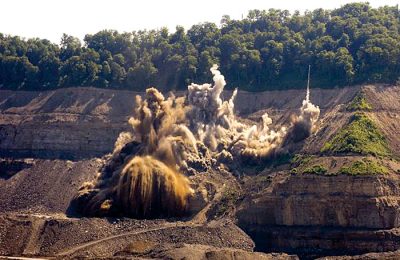
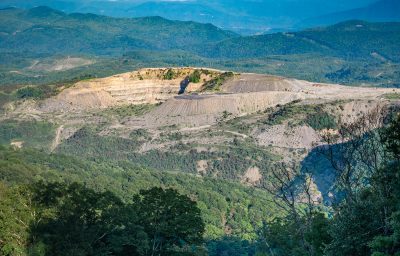
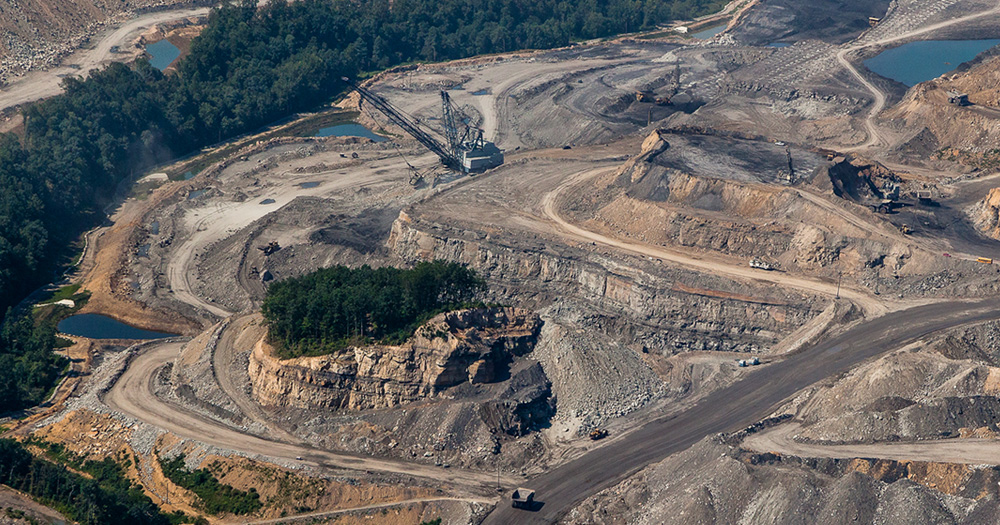
An aerial view of mountaintop removal mining in Appalachia

500 Mountains…Destroyed

Mountaintop removal is a form of extracting coal that uses heavy explosives to remove hundreds of vertical feet of a mountain to access thin seams of coal underneath. This “overburden” is then dumped directly into adjacent valleys, burying headwater streams.

Mountaintop removal has a devastating impact on the economy, ecology, and communities of Appalachia. To date, over 500 mountains have been leveled, and nearly 2,000 miles of precious Appalachian headwater streams have been buried and polluted by mountaintop removal.

Our Solutions

Appalachian Voices is committed to promoting and protecting the mountains and communities of the central and southern Appalachian region. Here are some of the ways we are working to accomplish our vision for a better region.

Federal Legislation

Appalachian Voices is creating a national movement to pass strong federal legislation that protects Appalachia. Our primary focus is passage of the Clean Water Protection Act in the House and the Appalachia Restoration Act in the Senate.

State Legislation

Appalachian Voices supports breaking your state’s connections to mountaintop removal, and we have helped introduce legislation in North and South Carolina, Georgia, Maryland, and Missouri that would make it illegal to use mountaintop removal coal within those states. We have also introduced legislation in Virginia that would make it illegal to dump mining waste from mountaintop removal sites into streams.

Appalachian Treasures

Appalachian Treasures is a compelling multimedia tour that brings citizens impacted by mountaintop removal to your church, rotary club, or community center to share their story, building the movement to end mountaintop removal neighborhood by neighborhood.

The Appalachian Voice

The Appalachian Voice, our free bimonthly publication, works to raise the iconic stature of the region by covering the environmental, recreational, and cultural news in the Appalachian region since 1996.

The Alliance for Appalachia

Appalachian Voices is a proud member organization of the Alliance for Appalachia, a regional alliance working together to end mountaintop removal and promote a just and sustainable future for the region.

iLove Mountains.org

Working with the Alliance for Appalachia, Appalachian Voices created iLoveMountains.org , a powerful online resource and action center with over 40,000 supporters dedicated to ending mountaintop removal.

Mountaintop Removal in Google Earth

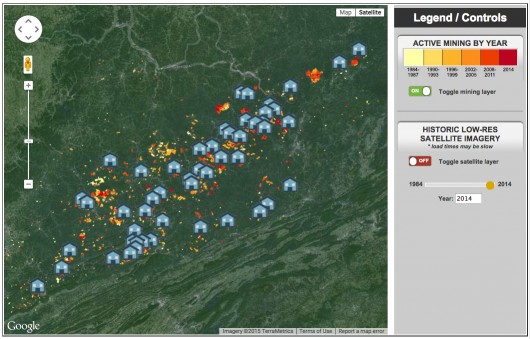
Appalachian Voices has partnered with Google to produce the “Appalachian Mountaintop Removal ” layer in Google Earth, bringing mountaintop removal directly to the millions of users of Google Earth. In 2009, Appalachian Voices was one of just five organizations worldwide recognized as a “Google Earth Hero.”


MSHA’s “Rules to Live By” Remind Us of Real Risks

On Jan. 31, the head of U.S. Mine Safety and Health Administration, Joe Main, announced the next phase of the “Rules to Live By” training, a program with a catchy title that aims to reduce mining fatalities and injuries. The 14 targeted safety standards in the “Rules to Live By III: Preventing Common Mining Deaths” were chosen because violations related to each contributed to at least five deaths and five mine accidents between Jan. 1, 2000 and Dec. 31, 2010.

The third phase of the program also marks a shift toward increased scrutiny of surface mine safety with 11 of the 14 targeted standards directly related to surface mining operations, which are often thought of as safer than underground mines. Main said the need to shift the focus from deep mines to surface operations became clear in 2011 when five deaths occurred in just 41 days and emphasized that, although 2011 was the second safest year on record, two-thirds of the total 37 lives lost occured on coal, metal and nonmetal surface mines.

Of the 14 standards, eight are coal priority standards, including daily inspections of surface coal mines and plans for the safe control of all highwalls, pits and spoil banks, “which shall be consistent with prudent engineering design and will insure safe working conditions.”

An announcement made by MSHA on Tuesday describes the intent of Phase III:

Beginning April 1, MSHA will focus more attention on these 14 standards with enhanced enforcement efforts, increased scrutiny for related violations, and instructions to inspectors to more carefully evaluate gravity and negligence – consistent with the seriousness of the violation – when citing violations that cause or contribute to mining fatalities. MSHA inspectors will receive online training to promote consistency in enforcement activity across the agency.

Increased scrutiny of mine operator safety, effective regulation, inspection and enforcement can only be a good thing. When rules put in place to protect workers are seen as little more than threats to profits, they are ignored, and miners are taken from their families and loved ones by preventable deaths. MSHA should be commended on their efforts to stay up-to-date with the conditions that put workers at risk.

But Main’s announcement can also be read as a ironic reminder: Mountaintop removal puts entire communities at risk by imposing an economic, environmental, and public health burden on families. They have their own “Rules to Live By” that include clean air, water and economic and legal justice against a destructive industry encroaching on their homes. Most of these citizens have no way to defend themselves from the long list of negative impacts, conveniently considered “externalities” by the coal industry. And as peer-reviewed studies and mounting evidence show an increase in birth defects around these sites it’s becoming clearer than ever, citizens of Appalachia need stronger enforcement of their rules too.

Just like we need safe mines, we need safe communities. But we can’t have either when mountaintop removal is the mining method of choice.

From the Front Porch

Tennessee’s Letters To The Editor Continue To Fight Mountaintop Removal

Tennessee has got the ball rolling as many anti-mountaintop removal allies are writing in to their local newspapers to get their voices heard.The mountains of Appalachia are some of the oldest and most beautiful found in the U.S., and they are being slowly destroyed by mountaintop removal.

The Tennessee Scenic Vistas Protection Act is a bipartisan bill that will prohibit surface mining at elevations higher than 2,000 ft. If this bill is passed, there will be NO more mountaintop removal in Tennessee, and it will also be the first state to ban mountaintop removal.

Here are some letters to the editor published in city newspapers in Tennessee:
Bristol: http://www2.tricities.com/news/2012/jan/29/save-mountains-tennessee-virginia-ar-1647406/
Chattanooga: http://www.chattanoogan.com/2012/1/27/218181/Scenic-Vistas-Not-A-Jobs-Issue.aspx
Knoxville: http://www.knoxnews.com/news/2012/jan/24/letter-support-vistas-protection-act/
Nashville: http://www.tennessean.com/article/20120116/OPINION02/120115012/Mining-industry-should-not-demonize-40-Days-Prayer

Thanks Tennessee for your persistent efforts to help end the injustice of mountaintop removal. Way to go everyone, and keep those letters to the editor flowing!

From the Front Porch

Blair Community Center and Museum Needs Your Support

If you’ve ever heard of Blair Mountain, you know the turmoil it has been through in the last several decades. Now this historic mountain and its battlegrounds are being threatened by surface strip mining. That’s why the Blair Community Center and Museum needs your support!

The Blair Community Center and Museum is a nonprofit organization working to promote and preserve the history of Blair Mountain. Established in the fall of 2011, the Community Center and Museum has been working to reach out to those unaware of environmental destruction caused by strip mining of Blair Mountain. Despite their tireless efforts, they simply do not have the funds to allow the organization to grow.

The Blair Community Center and Museum sits at the base of historic Blair Mountain in Logan County, WV

The Community Center and Museum is currently working in a large church, which they use as an office, community center and museum. It has a leaky roof, poor heating, and there is no drinkable water nearby. They also need to improve their museum by adding showcases, frames and important museum pieces.

The Blair Mountain Community Center and Museum has a goal of reaching $10,000 by the end of April. The projects, of course, will cost more than the goal they have set for themselves, but this money would aid in planting the seed to get them going.

Blair Mountain, located in Logan County, WV, was once the site of one of the nation’s largest labor conflict, the Battle of Blair Mountain. This battle was only five days long, but was heavily equipped with machine guns, explosives and an estimate of over one million rounds of ammunition.

More than 15,000 coal miners gathered in Charleston, WV, in an attempt to overthrow the control barons of the coal mining companies. Little did they know that a private army led by the Logan County Sheriff and coal operators were awaiting their arrival.

Though the battle was almost a century ago, it is not taught in schools and many people may not have even heard of it.

So please help our friends of Blair Community Center and Museum as they continue their fight to save this historical place they’ve called home for centuries.

To find out more information about this project or to donate, visit: www.indiegogo.com/The-Start-of-A-New-Beginning.

From the Front Porch

TN Governor Can Lead Tennessee Away from Mountaintop Removal

Tennessee Governor Bill Haslam opposed mountaintop removal during his gubernatorial campaign. Now is the time for him to put action to those words

Appalachian Voices is working around the clock to pass the Tennessee Scenic Vistas legislation. This bill would make Tennessee the first state to ban mountaintop removal by ending surface mining over 2,000 feet of elevation. We sent the following letter to Governor Haslam urging him to put action to his words against mountaintop removal

Tennessee has lost 85% of its mining jobs since 1985 due to an increase in the percentage of production that comes from surface mining, as well as an overall decline in production. 95% of the high-elevation surface mines in the state are owned by out of state coal operators. Meanwhile, our mountain-based tourism industry employs 175,000 people and brings in more than $13 billion to Tennessee every year.


Governor Haslam,

Appalachian Voices is proud to serve and protect the economy, ecology, and rural mountain communities of Tennessee and the greater Central and Southern Appalachian Region. Our top priority for 2012 is ending mountaintop removal coal mining.

For Tennessee, that means we must pass the Scenic Vistas Protection Act. We ask for your leadership in supporting this critical bipartisan bill, while taking the strongest possible opposition to high-elevation surface mining and mountaintop removal in Tennessee.

The Scenic Vistas Protection Act would ban surface mining over 2,000 feet in elevation, protecting Tennessee’s most beautiful and important economic assets. This legislation has bipartisan support in both houses. Tennessee produces less than 0.2 percent of America’s coal, and our production is in steep decline. However, surface mining has negatively impacted more than 125 square miles of the Cumberland Plateau, and many more peaks are threatened by high-elevation surface mining and mountaintop removal. Appalachian Voices believes that we don’t need to blast our mountains apart to mine coal in Tennessee. Surface mining is increasingly done by out of state coal operators such as Premium Coal who come to Tennessee, tear down our mountains and pollute our watersheds. In fact, 95 percent of the high-elevation surface mines that would be impacted by the Scenic Vistas bill are owned by out of state coal operators.

Mountaintop removal means fewer mining jobs for Tennessee. Since 1985, Tennessee coal mining jobs are down 85% due to declining production and the increase in the percentage of coal production that comes from surface mining. Studies show that communities around mountaintop removal have higher unemployment and higher poverty than similar Appalachian communities that rely on underground mining. Since 2009, an increased oversight of mountaintop removal operations has meant an increase in mining jobs, due to the fact that companies are beginning to rely more and more on underground mining to meet their production. Appalachian coal mining jobs are up despite the recession because there is less mountaintop removal.

In addition, Tennessee taxpayers are wasting millions every year to prop up the coal industry. In 2009 an independent study showed that when all revenues and expenditures are considered the coal industry and its direct and indirect employees present a net cost of approximately $3 million to the State of Tennessee. The Tennessee Valley Authority (TVA), our state’s largest utility, pays more for Tennessee coal than any other coal they purchase due to the high sulfur content. TVA purchases less than 0.7% of its coal from Tennessee, and less than 0.09% of its coal from Tennessee surface mines.

Tennessee’s mountain-driven tourism industry employs more than 175,000 people in our state, and brings in more than $13 billion every single year. The Great Smoky Mountains National Park is the most visited National Park in the entire country, drawing more than 9 million visitors every year, twice as many as the Grand Canyon. The tourism provides 470 times more jobs than the coal industry in Tennessee.

Numerous peer-reviewed studies show direct links between mountaintop removal mining and negative human health impacts. When a mountain is blasted apart, heavy metals and chemicals like arsenic, lead, selenium, mercury, copper, chromium and others enter the air and surrounding watersheds. Studies show increased mortality rates, lung cancer, and chronic heart, kidney, and lung disease in communities surrounding mountaintop removal operations. In 2011, a study found that counties in and near mountaintop mining areas had higher rates for five of six types of birth defects including circulatory/respiratory, musculoskelatal, central nervous system, gastrointestinal, and urogenital defects.

It is urgent that we protect our mountains and mountain communities by ending mountaintop removal and high-elevation surface mining in this state. We must pass the Tennessee Scenic Vistas Protection Act.

Governor Haslam, we urge you to bring action to your stated opposition to mountaintop removal by personally encouraging members of the Senate Committee on Environment, Conservation and Tourism, and the House Committee on Conservation and the Environment to pass the Scenic Vistas Act immediately. The Tennessee General Assembly has the opportunity to come together, protect our mountains, protect our economy, protect our jobs, and protect our public health, all with the support of public opinion. Our state requires your leadership. We look forward to working with you.

Sincerely,

Willa Coffey Mays
Executive Director
Appalachian Voices

J.W. Randolph
Tennessee Director
Appalachian Voices

From the Front Porch

Kentucky Arrow Darter Threatened by Mountaintop Removal

We’ve known for a long time that mountaintop removal is affecting Appalachian creatures. This time it’s a fish found in the Appalachian streams and rivers — the Kentucky arrow darter.

This fish, found only in Kentucky, is one of the top 10 U.S. species most threatened by fossil fuel development, according to a report released by the Endangered Species Coalition.

Credit: Kentucky Fish and Wildlife Resources

The darter thrives in the shallow waters of the upper Kentucky River Basin, where most of the state’s coal mining takes place. The darter was once found in 68 streams throughout Kentucky but it is now only found in 33.

The filth — mountaintop removal mining pollution — that coal companies are putting into the waters is burying these fish alive, along with impacting other wildlife. Humans are also dealing with more and more health issues like cancer and birth defects that have been linked to the erosion and toxins polluting the Appalachian streams.

This fish is a part of a grand habitat. It feeds on the many aquatic insects found on the banks of these streams, while birds, amphibians and other fish feed on the darter. This habitat is being skewed by the decreasing amount of darters throughout the region. Protecting the darter not only benefits this one particular habitat, but ultimately aids in the clean up of the headwaters in Kentucky making them safer to drink.

But unfortunately, this is not a perfect world of instant gratification.

In 2010, the Kentucky arrow darter became a candidate for Endangered Species Act protection, which means that it is on a federal waiting list. In a legal settlement between the Center of Biological Diversity and the U.S. Fish and Wildlife Service, the darter will be considered for protection in 2015.

Mountaintop removal has already destroyed more than 500 mountains, 1 million acres of hardwood forests and 2,000 miles of streams throughout Appalachia.

One may ask how protecting a single species of fish can put a stop to mountaintop removal, but just remember what Neil Armstrong said, “One small step for man, one giant leap for mankind.”

From the Front Porch