Get Our RSS Feed!
Front Porch Blog


Appalachian Voices and Partners Challenge Kentucky’s Backroom Deal With Coal Company


Friday, May 17th, 2013 | Posted by Eric Chance


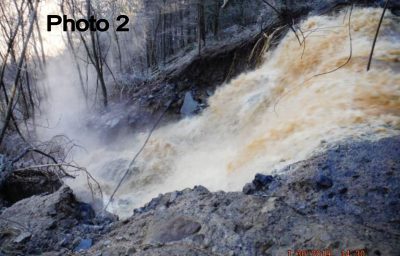
Watercolors by Frasure Creek. State inspector's photos show a variety of colors of water at Frasure Creek mines.

Yesterday, Appalachian Voices and our partner organizations filed a “petition for review”, essentially an appeal of a settlement between Frasure Creek Mining and the Kentucky Energy and Environment Cabinet. This settlement lets Frasure Creek off the hook for thousands of water quality violations over the past two years, while doing little to ensure that the company fixes its water quality problems.

Our challenge of this settlement focuses on the way in which it came about. But first, a bit of background.

We have a separate case that is ongoing against Frasure Creek for submitting false water monitoring data (entire reports were duplicated and only the dates were changed). After we uncovered this problem the company began turning in more accurate reports, which for the first time showed lots of pollution problems. We then filed a second suit against Frasure Creek for thousands of these pollution problems (which had been hidden by reporting problems before our first suit). Then the cabinet also filed a complaint for these pollution violations and more like them in state administrative court (a court run by the cabinet itself). We intervened in that case and became full parties to it, but were then shut out of it completely. In fact the settlement was entered despite our previous objections, and there is no evidence that our objections were even considered. The cabinet and Frasure Creek negotiated a settlement completely without us. The law and common sense both dictate that an agreement is not valid unless all the parties involved agree to it, and that is the basis for our challenge of this settlement yesterday.

Read more
...


A Must-Read Report, Another Reminder It’s Time to Build Something New in Central Appalachia


Tuesday, May 14th, 2013 | Posted by Brian Sewell


An updated and expanded report is a potent reminder that coal's decline isn't going away and policymakers should accept the challenges, just as many people already have. Click through to read the report's key findings.

The litany of voices pointing to the writing on the wall for the Central Appalachian coal industry continues to grow. They’re saying the same thing in almost every way imaginable, and have been for some time.

Watching coal production decline and demand shift as other energy sources out-compete coal domestically, it is vital that policymakers in Central Appalachia begin implementing policies and investments aimed at building a foundation for economic alternatives in coal-producing counties. A report released this morning by the consulting firm Downstream Strategies is a pretty good reminder why.

“The Continuing Decline in Demand for Central Appalachian Coal: Market and Regulatory Influences” expands on a January 2010 study and provides a detailed look at the challenges Central Appalachia faces, further making the case for the urgent need to act.

As the report’s lead author, Rory McIlmoil, who recently joined Appalachian Voices’ staff as energy policy director, points out:

Numerous factors influence demand for Central Appalachian coal, each of which has had — and will continue to have — a significant impact on the local economies where the coal is mined. In 2010, we recommended that state and local leaders take immediate steps to help diversify coalfield economies. To a large extent, that has not happened. However, it is vital that public officials begin making the political and financial investments necessary to build the foundation for new economic development opportunities in coal-producing counties.

Read more
...


Tending to Appalachia’s Bright Future


Tuesday, May 14th, 2013 | Posted by Cat McCue


A word cloud created from workshops and panel sessions at the conference show the prevalence of positive thinking and themes. Courtesy of Kentuckians for the Commonwealth

I had never been to Harlan County. Sure, I’ve heard the songs, seen the movie, and know the stories, but nothing compares to being there, driving the Kentucky back roads, stopping in local shops, talking to folks.

It’s beautiful country, especially in April with the redbuds blooming and the bright greens of spring blushing up the mountainsides. It’s a friendly place – people went out of their way to make me feel welcome.

It also has more than its share of economic troubles. This is coal country, after all, where big companies haul out the black rock and most of the profits along with it. Harlan County and most of the surrounding counties have a poverty rate in the range of 20 to 28 percent.

This is not news to people living here. They know it, they live it, and they are looking at a million different ways to change it, to create Appalachia’s Bright Future. This was the name of the three-day conference in Harlan, hosted by Kentuckians for the Commonwealth a few weeks ago. It brought together more than 200 people from eastern Kentucky and beyond for an extended conversation about creating a just economy in the region. There was much discussion about what that even means, and while attendees each had a slight variation, several common themes emerged:

1. There is no silver bullet. There is no single industry or company that will turn it all around. Which is a good thing, most agreed, because a root cause of the region’s woes is being too dependent for too long on one industry.

2. There is no magic wand. No one is going to come in “from the outside” to rescue Harlan, or the rest of Appalachia’s’ coal country.

3. It’s about “leadership in place.” The future lies in nurturing home-grown entrepreneurship. Unlike a generation or two ago, young people today want to stay here, and many people who moved away want to return. This profound sense of homeplace was evident throughout the conference.

4. It’s about community and resilience, improving the quality of life and opportunity for everyone, collaborating with neighbors down the street or two counties over so that all can benefit.

5. It’s also about honoring coal miners and their families, those who have sacrificed in untold ways to help build our nation and power our modern lives, who deserve all the opportunity and benefit of a “just economy” as well.

Read more
...


Clean Water Protection Act Introduced with 45 Cosponsors


Tuesday, May 7th, 2013 | Posted by Thom Kay


Yesterday, Rep. Frank Pallone (D-NJ) and Rep. Dave Reichert (R-WA) introduced the Clean Water Protection Act in the 113th Congress with 45 original cosponsors.

The Clean Water Protection Act, H.R. 1837, is a bill in the U.S. House of Representatives which would sharply reduce mountaintop removal coal mining by making it illegal to dump mining waste into valleys and streams. To date, more than 2,000 miles of streams have been buried or severely polluted.

As the bill sponsors point out in their Dear Colleague letter to other members of Congress:

An EPA scientific study in 2008 shows that more than 63% of the streams sampled below mountaintop removal coal mining operations exhibited long-term impairments to aquatic organisms. In some large watersheds, more than half of the streams are impaired.

Last Congress, more than 130 representatives, from Kentucky to Hawaii, took a stand against mountaintop removal coal mining by cosponsoring the Clean Water Protection Act.

It is crucial that we carry over the momentum we built during the last Congress by having a large group of cosponsors. For your Representative to sign onto the bill, they need to hear from you.

Take action now and tell your Congressperson you expect their support of this important legislation.

Advancing Energy Efficiency in Virginia


Wednesday, May 1st, 2013 | Posted by Nathan Jenkins


Learn about the electric membership cooperatives that serve Virginians and communities across the region on our Energy Savings for Appalachia page.

When it comes to energy efficiency, Virginia’s policymakers could do more, a lot more. The commonwealth came in 37th place on the American Council for an Energy-Efficient Economy’s (ACEEE) most recent state scorecard, which ranks states by energy efficiency policies.

The scorecard follows up on a report the group published in 2008, stating that Virginia could meet 31 percent of projected demand by 2025 with “cost-effective” energy efficiency initiatives.

The report defines cost-effective measures as those that would cost less to implement than what the average resident currently pays for electricity. In Virginia, that is slightly over 10 cents per kilowatt hour meaning that for less than 10 cents per kilowatt-hour, Virginia could avoid 31 percent of projected electricity demand. In fact, 85 percent of the recommendations would cost less than eight cents per kilowatt hour.

Contrasting what is possible with what would have a chance in the Virginia legislature, the report also looked at a less aggressive option of 19 percent efficiency by 2025. The costs for these measures would all be less than 8 cents per kilowatt hour and many would be under three cents — or less than one-third of what it would cost to fill that gap by burning coal and natural gas.

Read more
...


Tennessee Tuesday: What Do We Do Now?


Tuesday, April 30th, 2013 | Posted by JW Randolph


This is a post about how we can improve life for Tennesseans, protect an American culture that has endured for centuries, and promote our beloved Appalachian Mountains that once stood higher than the Himalayas, and are now threatened by mountaintop removal coal mining.

Tennessee Tuesdays is a new weekly feature on the Appalachian Voices Front Porch blog. While our main goal is to end mountaintop removal, we also hope to spread the gospel of hope, bring light to issues facing Tennesseans, and offer solutions on how we can move our state toward a cleaner and more energy efficient future.

Are you from Tennessee or nearby? Introduce yourself in the comments and let us know what you’d like to hear about. For now, welcome! Have a cup of coffee and take a minute to enjoy your Tennessee Tuesday.

What’s been happening in Tennessee lately?

Tennessee Legislature 2013
My home state has been in the national news a lot the last few months and not for the greatest reasons. Our legislature was constant fodder for late night comedians (catch Daily Show and Colbert’s greatest Tennessee hits here, here, and here) and was generally considered a bumbling embarrassment for most Tennesseans who don’t respond to “Senator.”

Read more
...


Coal Ash Floods Congress and the Courts


Tuesday, April 23rd, 2013 | Posted by Brian Sewell


e. The trend is likely to continue until EPA announces clear rules to regulate the to

Since the 2008 Kingston, Tenn., coal ash spill, the toxic waste has been hotly debated in the media, Congress and the courts.

On April 11, the U.S. House of Representatives Subcommittee on Environment and Economy held a hearing in part to promote the Coal Ash Recycling and Oversight Act of 2013, drafted legislation that would prevent the EPA from implementing federal regulation of coal ash, leaving regulation up to the states.

Some witnesses, including the former director of the Mine Safety and Health Academy, Jack Spadaro, and Lisa Evans, an attorney for Earthjustice focused on hazardous waste, testified against the draft, which is modeled on past legislation that failed and was called “unprecedented” in environmental law by the nonpartisan Congressional Research Service.

“Without a doubt, when mismanaged, coal ash harms Americans nationwide by poisoning water and air and by threatening the very existence of communities living near high hazard dams,” Evans said at the hearing. “We must work together to establish regulations that foremost prevent injury to health and ensure the safety of all communities.”

Spadaro, who has been involved in the evaluation and regulation of coal waste dams since 1972 and wrote federal and state regulations governing the structural integrity of dams in the wake of the Buffalo Creek Flood, cautioned subcommittee members against moving ahead with the draft. According to Spadaro, the proposed legislation lacks the adequate engineering requirements and enforcement by a federal agency necessary to prevent another spill similar to the TVA disaster that would lead to irreversible environmental damage and possible loss of life.

“There are thousands of such structures in the United States at this time,” Spadaro said, “and the failure of one or more of these dams is assured unless strict engineering standards are imposed.” The Southeast is home to 40 percent of the nation’s coal ash impoundments, and according to the EPA, contains 21 of the nation’s 45 high hazard dams.

Read more
...


“War on Coal” Claims are a War on Reality


Wednesday, April 10th, 2013 | Posted by Melanie Foley


A national average of 88,152 coal mining jobs under President Obama represents a 15 percent increase from the average under the Bush administration of 76,470. Graph by Appalachian Voices

The coal industry and the members of Congress who depend on its support have accused President Obama and the U.S. Environmental Protection Agency of waging a “war on coal.” Industry supporters argue that limits on emissions from coal-fired power plants and increased scrutiny of mountaintop removal mining permits are killing jobs. But the numbers show that, aside from being a tired rhetorical trope, the “war on coal” is also a myth.

This week, Appalachian Voices released an analysis of the latest data from the Mine Safety and Health Administration that reveals the fallacy behind “war on coal” claims. An average of 88,152 coal mining jobs under Obama represents a 15 percent increase from the Bush average of 76,470. Employment in 2011 and 2012 was the highest two-year period in 15 years. Each of the top 10 coal-producing states have seen more jobs on average under Obama than under Bush, and nine of those states saw higher employment in 2012 than at any point during the Bush years.

One of the main factors contributing to the employment increase is a decrease in productivity. Coal is growing scarce and difficult to reach, especially in Appalachia, and it takes more miners than it once did to mine the same amount of coal. Since its peak in 2000, productivity has declined 30 percent. Increased underground mining explains some of this decline since it requires more workers than large-scale surface mining methods such as mountaintop removal.

Read more
...


Protecting Tennessee’s mountains? Not worth the Senate’s time.


Wednesday, March 20th, 2013 | Posted by JW Randolph


Despite broad citizen and political support for a bill protecting Tennessee’s mountains, the state Senate Energy, Agriculture and Natural Resources Committee today decided to not even allow public testimony on the measure and instead killed the bill.

SB99, the Scenic Vistas Protection Act, was slated to be heard by the committee during its usual meeting time at 9:30 (CST) this morning. The bill would prohibit mountaintop removal coal mining from ridges above 2,000 feet on the Cumberland Plateau.

Along with our good friend Ann League, a resident and property owner in Tennessee’s coal-bearing region, I had been scheduled to testify before the committee. But just as we were called up to speak, the chairman stopped us short. Several Members had left the room, and when none of the committee members offered a motion on the bill, the Chairman declared the bill dead, and we were not allowed to speak.

Despite the fact that Tennesseans from the left, right and center, and from a broad array of interests have come together to protect our mountains, our voices were silenced.

Instead, the senators chose to side with the coal industry whose political influence has long outlasted its ability to grow jobs in our state or protect the health and well-being of citizens in the coal region.

Two senators who have generally supported mountain protection, Ophelia Ford and Jim Summerville, didn’t come to the meeting, and a third, Charlotte Burks, who has voted for the bill in the past, left.

Update: We’ve posted my prepared statement here, and a powerful speech by Representative Gloria Johnson (D-Knoxville) here. The news has been picked up by outlets worldwide including Chinese television, Switzerland, Singapore, Businessweek, NBC News in states from coast-to-coast, and in dozens of outlets across Tennessee. Local blog Nooga.Com has a great summary

Tennessee Votes on Scenic Vistas Tomorrow. CALL TODAY!


Tuesday, March 12th, 2013 | Posted by JW Randolph


Call today and Urge Tennessee Legislators to Protect the Beauty and Economic Vitality of the Cumberland Plateau.

Tennessee legislators are scheduled to take up a critical vote tomorrow on the Scenic Vistas Protection Act — a good bill with broad, bipartisan support that would help one of Tennessee’s most important assets – our mountains.

Representative Gloria Johnson (D-Knoxville) will be carrying the bill (HB 43 / SB 99) in the House Subcommittee on Agriculture and Natural Resources, and Senator Lowe Finney (D-Jackson) in the Senate Committee on Energy, Agriculture, and Natural Resources.

Appalachian Voices urges you to call committee members and ask them to support the common sense “Tennessee Scenic Vistas Protection Act (HB 43 / SB 99)“.

House:
Chairman Ron Lollar (R-Bartlett) / 615-741- 7084
Curtis Halford (R-Dyer) / 615-741-7478
Andy Holt (R-Dresden) / 615-741-7847
Judd Matheny (R-Tullahoma) / 615-741-7448
Billy Spivey (R-Franklin) / 615-741-4170
John Tidwell (D-New Johnsonville) / 615-741-7098
Ron Travis (R-Dayton) / 615-741-1450
Brenda Gilmore (D-Nashville) / 615-741-1997 [This is a “Thank you!” as Representative Gilmore is a cosponsor of the Scenic Vistas bill.]

Senate:
Chairman Steve Southerland (R-Morristown)/615-741-3851
Mae Beavers (R-Mt Juliet)/ 615-741-2421
Jim Summerville (R-Dickson) / 615-741-4499
Mike Bell (R-Riceville) / 615-741-1946
Charlotte Burks (D-Monterey) / 615-741-3978
Ophelia Ford (D-Memphis) / 615-741-1767
Todd Gardenhire (R-Chattanooga) / 615-741-6682
Dolores Gresham (R-Somerville) / 615-741-2368
Frank Niceley (R-Knoxville) / 615-741-2061

Tell these legislators your name and let them know you are a Tennessean who cares about protecting our mountains. And please pass this along, so that legislators hear from as many Tennesseans as possible.

Talking points and bill information below…

Read more
...


North Carolina Cares About Clean Water


Thursday, March 7th, 2013 | Posted by


According to a recent report by Land for Tomorrow, 91 percent of residents in North Carolina and surrounding states believe it is “important” or “very important” to conserve and protect water and other natural resources. Additionally, a 2002 publication of the N.C. State Economist it was found that people are willing to pay more money in the form of travel expenses in order to enjoy higher levels of water quality. Based on an estimated 14.7 million water-related recreation trips each year by North Carolinians, annual economic savings from water improvements are estimated to be $11.9 million for the Neuse waterway, $14.7 million for Cape Fear improvements, and $6.5 for Tar-Pamlico. While protection of natural resources may sometimes be a divisive topic, residents of North Carolina share a common desire for clean water, with good reason. Clean water is good for the environment and the economy.

The benefits of clean water can also be understood by realizing the costs associated with water treatment. According to a report by the N.C. Division of Water Quality, costs to be considered include additional water treatment, developing new drinking water sources or providing emergency replacement water, public information campaigns when pollution incidents arouse public and media interest, and payment for consulting services and staff time. When Burlington, N.C., found contaminants in their source water that were not eliminated during treatment, city subsidies were used to eliminate it from source waters.

Perhaps a more important measurement of the economic benefits of clean water is the success of publicly funded solutions for addressing water pollution. The N.C. General Assembly established the North Carolina Clean Water Management Trust Fund in 1996 and its funding of resource conservation has strengthened the state’s economic vitality. According to a report by the Trust for Public Land, every dollar invested In the N.C. Clean Water Management Trust Fund returns four dollars to the state in the areas of drinking water protection, flood control, tourism and outdoor recreation.

Read more
...


Renewed Resolve: Pushing for Energy Reform in Virginia


Wednesday, March 6th, 2013 | Posted by Nathan Jenkins


Appalachian Voices remains committed to achieving a more robust renewable energy policy that brings clean energy and good jobs to the commonwealth.

Reform of Virginia’s renewable energy law was in the spotlight on both sides of the political spectrum in the General Assembly this year. In the end, only a few adjustments were made to the law, none of which encourage the vibrant solar and wind industries that Virginians want, nor support a market for small businesses promoting renewable technologies.

But the shortcomings of Virginia’s latest legislative session have only strengthened Appalachian Voices’ resolve to achieve a more robust renewable energy policy that actually brings clean energy and good jobs to the commonwealth.

Laws have been enacted in 38 states to encourage the development of the renewable energy industry – and they have ushered in cleaner air and job growth. In some of those states, the industry is growing exponentially, in thousands of jobs and tens of thousands of clean megawatts.

Virginia has had a renewable energy law since 2007, but utilities have purchased credits rather than investing in Virginia jobs. At times, state law has been interpreted so that utilities cannot invest in renewable energy despite the enactment of renewable energy goals.

Appalachian Voices hoped to fix that during this year’s legislative session by advocating for a requirement that Virginia utilities could only use new wind and solar power built in Virginia to satisfy the law. Instead, a law spawned by Virginia Attorney General Ken Cuccinelli simply removed financial incentives for renewable energy and ignored our fix, despite support from the utilities.

Read more
...


Virginia Transportation Board OKs Coalfields Expressway Project


Thursday, February 21st, 2013 | Posted by Nathan Jenkins


Approved on Wednesday by the Commonwealth Transportation Board, the redrawn route prioritizes Alpha Natural Resources' access to coal, not travelers' access to local communities. Click to view the full-size map.

Yesterday, Virginia’s Commonwealth Transportation Board approved a four-lane divided highway that will flatten steep mountain ridges in southwest Virginia along a route proposed by Alpha Natural Resources — the largest coal company operating in Appalachia today.

The proposed 26-mile Coalfields Expressway is only a few miles off of several less destructive routes studied by the Virginia Department of Transportation in 2001 when it conducted a detailed environmental review of the area. The difference is that VDOT looked for a suitable place to build a highway. Alpha and other coal companies such as Rapoca Energy, on the other hand, selected the most profitable route for surface mining, using the highway as justification for the environmental toll they would inflict along the way.

This difference in purpose of the proposed routes is apparent when you look at the estimated impacts. The route VDOT selected in 2001 would have a 750-foot right of way that would disturb about 1,100 acres of land, four miles of streams and 720 acres of forest. Those impacts alone are daunting, but they pale in comparison to the redrawn route. Alpha’s path of destruction, with its 2,200-foot right of way, would flatten more than 2,100 acres, bury 12 miles of streams and clear-cut more than 2,000 acres of forest — not to mention destroy two churches and three cemeteries.

Nevertheless, VDOT sees this “coal-synergy” project as beneficial because it will cost taxpayers $2.8 billion to build, as opposed to the projected $5.1 billion without collaboration from the coal industry. The savings are disputable, however, and do not factor in the environmental cost of the road’s relocation. VDOT’s rush to make this project a reality has led them to disregard recommendations from the U.S. Army Corps of Engineers, the U.S. Environmental Protection Agency and the U.S. Fish and Wildlife Service — all of which are asking for a full environmental review of the new route.

Read more
...


A Clearcut Connection Between Mountaintop Removal and Climate Change


Wednesday, February 20th, 2013 | Posted by Melanie Foley


Mountaintop Removal and other destructive land uses could turn the Southern Appalachians from a carbon sink to a carbon source in as little as 12 years.

Scientists from the universities of Kentucky and California recently released a study detailing the climate implications of coal extraction by mountaintop removal. If coal mining continues at its current pace, the authors predict the next 12 to 20 years will see Southern Appalachian forests switch from a net carbon sink to a net carbon source — meaning the area will emit more carbon than it takes in.

Consequently, ending mountaintop removal may have more environmental benefits than originally realized. The long-standing goals of mountaintop removal opponents have been to protect human lives, improve drinking water, and support ecosystem health. This new research shows that ending this destructive mining practice would also be a victory in the fight against climate change — and not just by moving away from dirty coal.

Read more
...


Turning a Win-Win into a Lose-Lose: Virginia Senate Kills Renewable Energy Bill


Wednesday, February 6th, 2013 | Posted by Nathan Jenkins


Rather than fixing a problem, Virginia lawmakers prolonged it when they killed legislation to reform the state's renewable energy portfolio standard.

Last fall, Virginia Attorney General Ken Cuccinelli latched on to the idea that Dominion Virginia Power and Appalachian Power did not deserve huge bonuses for buying cheap renewable energy credits without actually building wind and solar projects in Virginia, and released an unsolicited report on the issue.

Appalachian Voices and our partners in the Wise Energy for Virginia Coalition have long advocated that the bonuses were failing to develop the renewable energy industry in the state and that a legislative fix is in order. The Senate Commerce & Labor Committee reached the same conclusion and tasked Cuccinelli and the utilities to work out an agreement, which they did.

The problem is that Cuccinelli, while claiming to resolve concerns from the environmental community, failed to invite us to the table. The result was a bill that simply dropped the bonuses, but did not replace those incentives with a mandate to build renewable energy in Virginia or even a preference for better quality credits.

The Wise Energy coalition worked with Senator Donald McEachin and Delegate Alfonso Lopez on legislation that requires credits purchased by utilities to be from the newest and cleanest sources of renewable energy. The proposal was carefully crafted with the singular goal of picking up where the attorney general’s bill left off, but it actually solves the problem of misplaced incentives and the lack of investment in Virginia wind and solar power.

It was a reasonable measure. However, despite strong supporting testimony from our unlikely ally — even Dominion said it was the “best solution” for solving the credits problem — it failed in a House Commerce and Labor subcommittee last week. The Republican chairman, Delegate Terry Kilgore, and his colleagues refused to address the problem.

Read more
...


Renewing the Push for Renewable Energy in Virginia


Thursday, January 24th, 2013 | Posted by Nathan Jenkins


State-by-state Renewable Portfolio Standards. Map from Database of State Incentives for Renewables & Efficiency.

Each year, as Virginia’s General Assembly convenes, lawmakers are confronted with hundreds of proposals running the gamut from education to energy. Many involve complicated issues, and many are distorted by corporate interests and political posturing.

This year the legislature is grappling with a key renewable energy law, known as the Renewable Portfolio Standard (RPS), which it passed in 2007. An RPS sets a certain percentage of a utility’s power that comes from renewable sources; the intent is to spur modern technologies such as wind turbines or solar panels.

Twenty-nine states and the District of Columbia have a mandatory RPS with strict standards. In those states, thousands of megawatts of wind and solar energy is powering homes and businesses, and the renewable energy industry is producing thousands of new jobs every year.

In Virginia, the RPS is voluntary – and has not led to the construction of a single wind turbine or solar panel in the commonwealth. The RPS law provides significant financial rewards – paid for by ratepayers – as a way to encourage utilities to use renewables. It also has a very loose definition of what constitutes renewable energy, making it easier for utilities to meet the goal, and get their reward. Which they’ve done handily. Dominion Virginia Power has received $77 million in RPS bonuses, and Appalachian Power Company has received $15 million. They relied almost entirely on existing hydro-power dams, most built before WWII, and credits purchased from renewable facilities in other states, to meet the goal.

Read more
...


Showing Faith in Appalachia’s Future


Friday, November 2nd, 2012 | Posted by Nathan Jenkins


Last Saturday, the Office of Justice & Peace of the Catholic Diocese of Richmond and Hollins University in Roanoke, Va., hosted an “Eco-Evening” to discuss how environmental issues in Virginia influence poverty and human health.

I was invited to relate the devastation caused by mountaintop removal coal mining. Many attendees were seeing photos of the desecrated mountains and sludge ponds in their state and other parts of Appalachia for the first time. Groans filled the room when I said that over 25 percent of Wise County, Va. has already been leveled.

Proponents of mountaintop removal have long promised that the practice would bring economic development to the region. Instead, we’ve been left with flattening mountains, polluted air and water. Fewer than 11 percent of abandoned mountaintop removal mines sites have been developed, and many that have been are publicly funded projects such as jails and community colleges. Occasionally a Wal-Mart or strip mall take root on the rocky soil.

Read more
...


Report Exposes How Big Coal, Electric Utility Money Dominates Virginia Politics and Policy


Wednesday, October 3rd, 2012 | Posted by Brian Sewell


How devoted is Virginia Gov. Bob McDonnell to dirty energy donations? Read our report to find out.

In advance of the Governor’s Energy Conference that is sponsored by Dominion Virginia Power, Alpha Natural Resources and Appalachian Power Company, Appalachian Voices and our allies released a white paper highlighting the influence that coal companies and utilities wield over Virginia energy policy.

“The top sponsors of the energy conference are also top sponsors of Virginia’s election campaigns,” said Tom Cormons, Virginia Director for Appalachian Voices. “Unfortunately, these companies dominate Virginia’s energy policy, just as they dominate the conference agenda. This harms consumers and taxpayers, and it may be the single greatest impediment to transitioning the commonwealth to a cleaner, healthier energy future.”

Analyzing more than a decade of publicly available data, the report draws the connection between the campaign contributions and corporate gifts from these and other dirty energy companies, and the poor record of Virginia in advancing energy efficiency and renewable programs compared to other states.

The report goes on to criticize the state’s voluntary Renewable Energy Portfolio Standard, which Chesapeake Climate Action Network Virginia State Director Beth Kemler calls “the holy grail of corporate handouts.” The misguided RPS program set marks that Dominion has been able to meet without building any wind or solar projects in Virginia. By meeting the RPS goals, Dominion qualifies for a bonus that will end up costing customers approximately $76 million over two years.

Go Tell It on Mountain Island Lake


Saturday, September 29th, 2012 | Posted by Matt Grimley


Last Sunday, the Charlotte Observer asked the question, “Are we doing enough on coal ash?” Two people stepped in to answer. The column in the negative was written by Sam Perkins, Director of Technical Programs for the Catawba Riverkeeper Foundation; the column in the affirmative was written by Mitch Griggs, vice president of environmental services for Duke Energy.

Perkins says that coal ash doesn’t get the hype it deserves. It leaches into our major rivers and lakes, poisons our fish and wildlife, and was the catalyst for one of the worst environmental disasters in our nations history. The fact is that coal ash is toxic: the heavy metals it contains are associated with cancer, birth defects, and other health problems.

“A person is entitled to do as they please on their property while respecting and not impacting property that is not their own,” says Perkins, raising a valid point: why are we allowing companies to pollute our waters? Clean water is our right, and why should current environmental regulations, which are inadequate and laden with exceptions for large utilities, allow utilities to plant coal ash ponds by public areas like Mountain Island Lake?

Aerial photo of the Riverbend coal ash ponds and their proximity to Mountain Island Lake

Fortunately, the people who live and love Mountain Island Lake, are stepping in, people like Sara Behnke. She heads up the organization We Love Mountain Island Lake, and is working to inform the public about the dangers of coal to our air, water and health. Specifically, she speaks up about the Riverbend Steam Station, its coal ash ponds, and their proximity to Mountain Island Lake, which happens to serve drinking water for Charlotte-Mecklenburg, Gastonia, and Mt. Holly. All in all, about 860,000 people get their drinking water from Mountain island Lake.

Read more
...


Coming Soon: 5th Annual Weekend in Wise


Friday, September 21st, 2012 | Posted by Molly Moore


The 5th Annual Weekend in Wise County, hosted by the Southern Appalachian Mountain Stewards and the Wise Energy for Virginia Coalition amid Virginia’s treasured Appalachian Mountains, is just around the corner.

October 12 through 14, experience the beauty and culture of southwest Virginia and learn about mountaintop removal coal mining. Participate in tours of mountaintop removal sites, sustainable living workshops, community and expert panels, activist trainings. Also, enjoy local food, live music and dancing!

RSVP: Click here to register today!

The weekend will also feature information on a new campaign to stop an egregious project called the Coalfields Expressway, a 50-mile-long strip mine masquerading as a highway in southwest Virginia.

Not sure if you can make it? Weekend in Wise is worth the journey.

Last September, two whirlwind weeks into the beginning of my service year with Appalachian Voices, the Boone staff told my fellow newbie and I to drive the twisty roads north towards the sleepy-seeming town of Appalachia, Virginia. When we reached the Weekend in Wise headquarters at Appalachia Civic Center, we found a committed community determined to grow awareness of mountaintop removal, strengthen the movement, and have a good time while doing so.

Read more
...


Facebook Twitter FlickR YouTube
Front Porch Bloggers Tags
Show/Hide list (-)

15th Anniversary 112th Congress 113th Congress A & G A & G Coal Corporation Acid Mine Drainage Across Appalachia Agriculture Air Pollution air quality Alabama ALEC Alexadra Cousteau Alliance for Appalachia Alpha Natural Resources American Chestnut american dream appalachia Appalachian Appalachian Culture Appalachian history Appalachian Identity Appalachian Legislators Appalachian politics Appalachian Regional Commission Appalachian State University Appalachian Streams Appalachian Transition Appalachian Treasures Appalachian Voices Appalachian Voices board of directors Appalachian Water Watch Appalachia Restoration Act Appalachia Water Watch Appalshop arch coal Arsenic Art Asheville Athens County Avian wildlife Bank of America bark Batson Creek Battle of Blair Mountain Bearwallow Mountain Beyond Coal campaign biodiversity black bears blair mountain blood mountain Blue Ridge Commons: Environmental Activism and Forest History in North Carolina Blue Ridge Escarpment Book Club Boone buffalo creek cancer carbon capture Carolina Mountain Land Conservancy Center for Appalachian Studies Central Appalachia Charlottesville Chattanooga Chimney Rock State Park China citizens united Clean Air Clean Air Act clean energy Clean Water Clean Water Act Clean Water Act 40th Anniversary Clean Water Protection Act Climate Climate Change climate change denial Coal Coal Ash coal ash health effects coal ash ponds coal decline coal electricity coal employment Coal generation Coal mining coal plants coal production Coal Report Coal Waste conductivity Congress Connestee Falls constellation Creation Care Cross-State Air Pollution Rule Cumberland Plateau Cypress creek d.c. Daniel Martin Moore David Brewer David McKinley Democracy dnc Documentaries Don Blankenship Downstream Strategies duke Duke Energy DuPont State Recreation Forest Earth Day EarthJustice Earth Ministry Eastern Band of Cherokee Economic Transition Economy editorial Education efficiency electricity Electric Utilities Elk Knob State Park Emory River Endangered species end mountaintop removal energy Energy Efficiency Energy Information Administration Energy Saving Energy Savings Environment environmental education Environmental Justice environmental literacy Environmental Protection Agency EPA Expedition Blue Planet extinction FArCES of Coal FERC Fish Kill Florence Nature Preserve fly ash Folktales Fontana Lake Foothills Trail forest Forestry Fox Squirrels fracking Frasure Creek Frasure Creek Mining and International Coal Group friends of smokies Gallatin game species gas gas emissions Georgia Georgia Power ghost stories globalization Golden-winged warbler Google Earth Gov. Steve Beshear grandfather mountain Great Smoky Mountains National Park green green-collar green building green economy green energy future GreenFaith and the Evangelical Environmental Network Greenhouse Gases Greenpeace Green River Preserve Hal Rogers Hampton Roads Hampton Roads Coal Plant HB 710 headquarters Health Heifer USA Hickory Nut Gorge Hidden Treasures High Falls hiking Hiking the Highlands hiking trails home improvement and remodeling Hooker Falls houses Hunting hydraulic fracking hydroelectricity ICG iLoveMountains Inside Appalachian Voices Interfaith Power & Light Interior Department Ison Rock Ridge Jay Rockefeller Jeff Goodell Jeff Goodell Jr. Jim Justice Jim Rogers jobs Joe Manchin Joseph Pizarchik Jr. Kathryn Newfont Kathy Mattea Kens Rock Kentuckians for the Commonwealth Kentucky Kentucky Energy and Environment Cabinet Kentucky Litigation Kentucky Riverkeeper Kudzu kudzu bug land Land Conservation Land management land protection LEAF lobbying local farming Marcellus Shale Massey Energy Matt Wasson membership spotlight Mercury Mercury and Air Toxics Standard mercury and air toxic standards Michael Johnathon mine Mine Safety and Health Administration Mining Jobs Molly McGinn mountains Mountaintop Removal Mountaintop removal permits MSHA Mussels N.C. Politics Nally & Hamilton Nantahala National Forest National Mining Association National Resources Defense Council Natural Gas Naturalist's Notebook nature New River Nick Rahall North Carolina NRDC nuclear ODEC Office of Surface Mining offshore wind Ohio Operation Medicine Cabinet opportunities Outdoor Recreation Patriot Coal Pennsylvania Photography Pine Mountain Park Pisgah Forest Politics pollution Possum Jenkins Powder River Basin Prescribed burns President Obama progress Progress Energy Property Rights public lands re-zoning recycling recycling building materials Red Red White and Water Religion in the Environment Renewable Energy Renewable Portfolio Standards Rick Boucher Riverkeeper Rivers Robert F. Kennedy Same Sun Here scenic vistas Scenic Vistas Protection Act Science and Nature science education SELC Selenium selenium pollution Senate settlement sewanee coal seam shale gas Sharyn McCrumb Shelley Moore Capito Sierra Club Silver Slip sludge sludge safety project Solar Solar Energy Solar Homestead Project South Carolina South Cumberland Plateau Southern Appalachian Mountains Southern Appalachian Mountain Stewards Southern Environmental Law Center SouthWings spirituality Sportsman’s Heritage Act spruce pine state environmental policy Stone Mountain stop mountaintop removal Stream Buffer Zone Stream Protection Rule summer camps Sundance Power Systems surface mining Surface Mining Control and Reclamation Act Surry Surry Coal Plant sustainability sustainable agriculture sustainable alternatives sustainable building sustainable farming tax credits and incentives Tennes Tennessee Tennessee Scenic Vistas Protection Act Tennessee State legislature The American Chestnut Foundation The American Legislative Exchange Council The Appalachian Voice the human cost The Voice This Green House Tom Cormons Tom Hansell Tom Kilgore TRAIN Act Transylvania County treasures Triple Falls TVA TVA Kingston coal ash spill U.S. Department of Energy U.S. Representatives from North Carolina U.S. Representatives from Tennessee U.S. Representatives from Virginia U.S. Representatives from West Virginia UMWA Uncle Falls United Mine Workers of America United Mountain Defense united states Upper Watuaga Riverkeeper uranium mining US Forest Service Viewpoint Virginia Virginia General Assembly Virginia ODEC virginia state parks Virginia Tech Wales War on Coal washington Washington DC Watauga Water Waterkeeper Waterkeeper Alliance Water Pollution Water quality weatherization Weed Patch Mountain Week in Washington West Virginia White Squirrel Hiking Challenge Wilderness Society Wildlife Williamson wind energy Wind Power wind turbine Wise County Wise Energy for Virginia Wise Energy for Virginia Coalition wvdep Youngs Mountain

Tags