Get Our RSS Feed!
Front Porch Blog


Clean Water Protection Act Introduced with 45 Cosponsors


Tuesday, May 7th, 2013 | Posted by Thom Kay


Yesterday, Rep. Frank Pallone (D-NJ) and Rep. Dave Reichert (R-WA) introduced the Clean Water Protection Act in the 113th Congress with 45 original cosponsors.

The Clean Water Protection Act, H.R. 1837, is a bill in the U.S. House of Representatives which would sharply reduce mountaintop removal coal mining by making it illegal to dump mining waste into valleys and streams. To date, more than 2,000 miles of streams have been buried or severely polluted.

As the bill sponsors point out in their Dear Colleague letter to other members of Congress:

An EPA scientific study in 2008 shows that more than 63% of the streams sampled below mountaintop removal coal mining operations exhibited long-term impairments to aquatic organisms. In some large watersheds, more than half of the streams are impaired.

Last Congress, more than 130 representatives, from Kentucky to Hawaii, took a stand against mountaintop removal coal mining by cosponsoring the Clean Water Protection Act.

It is crucial that we carry over the momentum we built during the last Congress by having a large group of cosponsors. For your Representative to sign onto the bill, they need to hear from you.

Take action now and tell your Congressperson you expect their support of this important legislation.

Mountaintop Removal 101: Congressional Research Service Updates Report


Thursday, May 2nd, 2013 | Posted by Brian Sewell


An updated report by the Congressional Research Service provides a look at the current legal and legislative challenges to mountaintop removal.

Every day, more Americans become concerned with the threat of mountaintop removal in Appalachia. Just yesterday, I was made aware of a website called “What About Mountains?” created by a fourth grade class at the Episcopal School of Knoxville. These students may just be learning about the issue, but they know that “mountaintop removal coal mining is not OK,” and seeing a photo of lush mountains reduced to “ugly blobs of land” is as fine a place to start as any.

Whether you’re in fourth grade or in your forties, it’s helpful to have a convenient compendium on the issue of mountaintop removal, especially considering the ever-evolving legal battles, status of bills on Capitol Hill, and state and federal level regulations. An updated report from the nonpartisan Congressional Research Service called Mountaintop Mining: Background on Current Controversies acts as a CliffsNotes for anyone concerned with the situation and interested in catching up.

The report summarizes the legal challenges, agency and congressional actions related to mountaintop removal and points out that, despite two recent court rulings underscoring the need for greater protections, few people on either side are please with the U.S. Environmental Protection Agency’s record on the issue. Mountaintop removal supporters complain of onerous rules that hamper employment and opponents point to poisoned water, unhealthy communities and shortened lives.

Read more
...


Kentucky’s Lab Certification- Is it strong enough?


Wednesday, May 1st, 2013 | Posted by Eric Chance


Yesterday, Appalachian Voices submitted public comments on a proposed wastewater lab certification program in Kentucky. To discharge polluted water, coal companies must receive a permit under the Clean Water Act. This permit that requires companies to test wastewater and report the data to ensure it falls within the limits of the permit. In Kentucky, there are currently no standards for labs that do this type of testing.

The proposed certification program is a direct result of the lawsuits for falsified water monitoring data we filed against three of the state’s largest coal mining companies. Our investigation revealed that many coal companies were repeatedly submitting the same data and knowingly leaving out reports of any violations of their permits. After we filed these lawsuits, the Kentucky Energy and Environment Cabinet inspected the labs being used for this monitoring and found that in many cases they were not even capable of correctly performing the required tests.

This graph shows some of the inaccurate data submitted by Frasure Creek Mining before our lawsuits lead them to start using a new lab. Click to enlarge.

We believe that enforcing standards on labs used by coal companies will help ensure that labs report accurate data, and that the regulations meant to protect water and those that depend on it from dangerous pollution are effectively enforced. This proposed rule will be a big step forward and we have applauded the cabinet for its efforts to fix these problems. However, there are several weaknesses in the rule that we hope are fixed before it is finalized.

All too often the cabinet has failed to live up to its obligations to protect the people and environment in Kentucky. That is why our comments suggest that discretionary duties given to the cabinet in this rule be made mandatory. Appalachian Voices will continue to work to require the state agencies to actually enforce these standards.

>>Click here to see our comments
>>Click here to read the proposed lab certification rule
>>Click here to read the draft lab manual

A Good Week for Mountains – Multiple Court Rulings Favor Science and Enforcement


Tuesday, April 23rd, 2013 | Posted by Brian Sewell


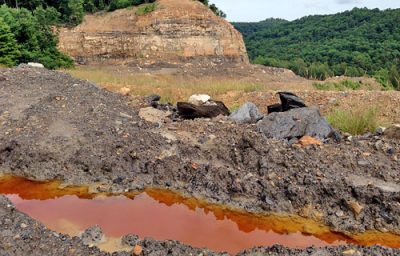
Earth Week is off to a good start after two major rulings in two days mean we may start seeing less of this.

We’re only two days into Earth Week — if we must limit it to one week out of the year — but it sure is getting off to a great start. In the past two days, two major court rulings have underscored the need for increased scrutiny from the federal agency responsible for evaluating environmental impacts of mountaintop removal coal mining according to the National Environmental Policy Act and issuing permits under the Clean Water Act.

Yesterday, the 6th U.S. Court of Appeals revoked the U.S. Army Corps of Engineers use of Nationwide Permit 21 (NWP 21), a streamlined and inadequate process that has contributed to the expansion of mountaintop removal in Appalachia since 1992. Kentucky and West Virginia residents, with the support of groups including Kentuckians for the Commonwealth, Kentucky Waterways Alliance and the Kentucky Riverkeeper, have challenged the legality of NWP 21 in state and federal court for a decade.

In its ruling, the three-judge panel called the Corps’ actions “arbitrary and capricious” and found that the agency did not follow the applicable Clean Water Act (CWA) and National Environmental Policy Act (NEPA) regulations, which require it to document its assessment of environmental impacts and examine past impacts before issuing new permits. From the ruling:

Though we generally give greatest deference to an agency’s “complex scientific determination[s] within its area of special expertise,” we may not excuse an agency’s failure to follow the procedures required by duly promulgated regulations.

After opting for streamlined nationwide permitting, the Corps took the easier path of preparing an environmental assessment instead of an environmental impact statement. Having done so, it needed to follow the applicable CWA and NEPA regulations by documenting its assessment of environmental impacts and examining past impacts, respectively. Failing these regulatory prerequisites, the Corps leaves us with nothing more than its say-so that it meets CWA and NEPA standards.

According to the Corps, approximately 70 surface mining permits authorized under NWP 21 qualify for a five-year accommodation to “provide and equitable and less burdensome transition” for coal operators. Whatever its impact on existing mountaintop removal permits, the ruling acknowledges that when it comes to protecting Appalachia, the Corps “say-so” is insufficient.

Read more
...


Coal Ash Floods Congress and the Courts


Tuesday, April 23rd, 2013 | Posted by Brian Sewell


e. The trend is likely to continue until EPA announces clear rules to regulate the to

Since the 2008 Kingston, Tenn., coal ash spill, the toxic waste has been hotly debated in the media, Congress and the courts.

On April 11, the U.S. House of Representatives Subcommittee on Environment and Economy held a hearing in part to promote the Coal Ash Recycling and Oversight Act of 2013, drafted legislation that would prevent the EPA from implementing federal regulation of coal ash, leaving regulation up to the states.

Some witnesses, including the former director of the Mine Safety and Health Academy, Jack Spadaro, and Lisa Evans, an attorney for Earthjustice focused on hazardous waste, testified against the draft, which is modeled on past legislation that failed and was called “unprecedented” in environmental law by the nonpartisan Congressional Research Service.

“Without a doubt, when mismanaged, coal ash harms Americans nationwide by poisoning water and air and by threatening the very existence of communities living near high hazard dams,” Evans said at the hearing. “We must work together to establish regulations that foremost prevent injury to health and ensure the safety of all communities.”

Spadaro, who has been involved in the evaluation and regulation of coal waste dams since 1972 and wrote federal and state regulations governing the structural integrity of dams in the wake of the Buffalo Creek Flood, cautioned subcommittee members against moving ahead with the draft. According to Spadaro, the proposed legislation lacks the adequate engineering requirements and enforcement by a federal agency necessary to prevent another spill similar to the TVA disaster that would lead to irreversible environmental damage and possible loss of life.

“There are thousands of such structures in the United States at this time,” Spadaro said, “and the failure of one or more of these dams is assured unless strict engineering standards are imposed.” The Southeast is home to 40 percent of the nation’s coal ash impoundments, and according to the EPA, contains 21 of the nation’s 45 high hazard dams.

Read more
...


Clean Water News: Congress Backs Down, N.C. Steps Up


Tuesday, March 26th, 2013 | Posted by Sandra Diaz


Thallium was once used as rat poison. Now DENR is suing Progress Energy for Thallium polluting the French Broad River from its Asheville power plant.

Last week, there was concern that the U.S. Senate budget resolution would end up containing measures to decrease funding for initiatives of the U.S. Environmental Protection Agency such as the release of guidelines for coal ash disposal and rules to ensure states are following water quality standards. Thanks to good Americans like yourself speaking up, the Senate budget remained free of dirty water amendments.

While the budget resolution is non-binding, and the Senate Appropriations Committee decides how funding gets allocated later in the process, the resolution send a strong message regarding the Senate’s priorities. Unfortunately, one of the more controversial amendments that did pass was in support of building the Keystone XL pipeline.

While the Senate backed down on loading up the budget resolution with dirty water clauses, the North Carolina Department of Environment and Natural Resources stepped and up and decided to take legal action against Progress Energy for the release of toxic heavy metals from their Asheville plant into the French Broad River. 

Western North Carolina Alliance, Sierra Club, and Southern Alliance for Clean Energy had filed a notice of intent to sue Progress Energy for violating the Clean Water Act for unpermitted seeps into the French Broad River. It appears DENR took notice and is now taking up their own case against Progress Energy. DENR is seeking injunctive relief and demanding Progress Energy solve the issue in lieu of the state seeking monetary damages.

Read more
...


Will This March Madness Be An Upset for Clean Water?


Friday, March 22nd, 2013 | Posted by Sandra Diaz


Basketball

Help Prevent a Clean Water Upset (Picture by mvongrue, hosted by Flickr)

UPDATE: The Senate Budget Resolution passed without any of the amendments mentioned below. Victory!

As most of you know, between the federal House of Representatives and the Senate, the Senate is usually the level-headed older brother of the family and tends to be a more deliberative legislative body. But this month the Senate decided it wanted to shake things up a bit by creating a little March Madness of its own.

The Senate is going through a seemingly insane process known on Capitol Hill as a vote-a-rama to reach a deal on a final Senate budget resolution. Senate leadership is allowing any number of amendments to be presented and voted on — whatever they can get done in 50 hours.

While all the amendments have yet to be presented, several of them take aim at the U.S. Environmental Protection Agency’s ability to do its job, which is to protect our air, water and public health. Some of the amendments could stop the EPA from:

    - Making sure states are complying with and improving water quality standards in accordance to the Clean Water Act.
    - Creating national standards for how coal ash, the toxic waste produced by coal-burning for electricity, is disposed and stored.
    - Restoring critical Clean Water Act protections to streams, wetlands and drinking water standards.

TAKE ACTION: We are asking supporters to contact their Senators. If you haven’t yet, there is still time.

Read more
...


North Carolina Cares About Clean Water


Thursday, March 7th, 2013 | Posted by


According to a recent report by Land for Tomorrow, 91 percent of residents in North Carolina and surrounding states believe it is “important” or “very important” to conserve and protect water and other natural resources. Additionally, a 2002 publication of the N.C. State Economist it was found that people are willing to pay more money in the form of travel expenses in order to enjoy higher levels of water quality. Based on an estimated 14.7 million water-related recreation trips each year by North Carolinians, annual economic savings from water improvements are estimated to be $11.9 million for the Neuse waterway, $14.7 million for Cape Fear improvements, and $6.5 for Tar-Pamlico. While protection of natural resources may sometimes be a divisive topic, residents of North Carolina share a common desire for clean water, with good reason. Clean water is good for the environment and the economy.

The benefits of clean water can also be understood by realizing the costs associated with water treatment. According to a report by the N.C. Division of Water Quality, costs to be considered include additional water treatment, developing new drinking water sources or providing emergency replacement water, public information campaigns when pollution incidents arouse public and media interest, and payment for consulting services and staff time. When Burlington, N.C., found contaminants in their source water that were not eliminated during treatment, city subsidies were used to eliminate it from source waters.

Perhaps a more important measurement of the economic benefits of clean water is the success of publicly funded solutions for addressing water pollution. The N.C. General Assembly established the North Carolina Clean Water Management Trust Fund in 1996 and its funding of resource conservation has strengthened the state’s economic vitality. According to a report by the Trust for Public Land, every dollar invested In the N.C. Clean Water Management Trust Fund returns four dollars to the state in the areas of drinking water protection, flood control, tourism and outdoor recreation.

Read more
...


Help Protect Kentucky’s Fish from Toxic Selenium


Wednesday, February 27th, 2013 | Posted by Eric Chance


Two headed trout, a result of selenium pollution. Courtesy of USFWS.

The Kentucky Energy and Environment Cabinet is currently attempting to significantly weaken the state’s water quality standards for selenium.

Selenium is a pollutant common at some coal mines that deforms and kills aquatic life. It bioaccumulates, increasing in concentration as it moves up the food chain, affecting larger fish and aquatic birds. At higher levels, selenium is toxic to people. Humans can be exposed to selenium through the water they drink and the fish they eat. Long-term exposure can damage the liver, kidneys, nervous system, and circulatory system.

Selenium pollution is expensive to prevent and to treat. By loosening standards, the cabinet is trying to protect the bottom line of polluters at the expense of the health of the state’s waterways and those that depend on them.

To learn more about selenium and why it is a problem in Kentucky, click here to read our selenium fact sheet (PDF).

Public comments are being accepted through Friday, March 1. Please help protect Kentucky’s fish from the toxic effects of selenium. Take a minute to make your voice heard by submitting a comment.

Even The Daily Show has taken note of the problem of selenium pollution in our nation’s waterways. The clip focuses on pollution from phosphate mines in Idaho, but the similarities between what happened there and what is going on in Kentucky are striking.

Finding Arsenic in Mountain Island Lake: Even a Sixth Grader Can Do It


Wednesday, February 20th, 2013 | Posted by Matt Grimley


Just recently, sixth grader Anna Behnke found high levels of arsenic near her home on Mountain Island Lake, a drinking water source for hundreds of thousands in the Charlotte, N.C. metro area. The contamination — which exceeds EPA drinking water standards twenty-fold — comes from coal ash seepage at Duke Energy’s Riverbend power plant, which the utility announced it will decommission in April without a plan to deal with the coal ash ponds on site.

View full article here.

N.C. State Rep. Harrison: Let the EPA Do Its Job


Wednesday, February 20th, 2013 | Posted by Davis Wax


Watch N.C. Rep. Pricey Harrison testify before the U.S. House Subcommittee on Environment and Economy.

What should the role of the states be in protecting human health and the environment?

Last Friday, the U.S. House Energy and Commerce Subcommittee on Environment and Economy held a hearing to untangle that complex question. North Carolina Rep. Pricey Harrison testified to the committee on the need for increased oversight and regulatory enforcement by the U.S. Environmental Protection Agency.

“The question is not whether states or the federal government have a role in environmental protection,” she told subcommittee members, “but whether each is playing its appropriate role under current law.”

Harrison highlighted the growing concerns of North Carolinians’ surrounding coal ash pollution from disposal ponds owned by Duke Energy as an example of how states are failing to protect citizens. The state began requiring more extensive groundwater monitoring a few years ago. But even now, with known instances of groundwater standards violations, no action has been taken by the state to get Duke Energy to address the contamination.

Another emerging issue is the reckless push to bring hydraulic fracturing to the state. State Senate Bill 76 would allow fracking in the state in two years, no matter the status of the state’s regulatory development, resources or staffing.

Read more
...


Kentucky Attempts to loosen Selenium Standards, Fish Attempt to Leave the State


Friday, February 8th, 2013 | Posted by Eric Chance


Fish deformed by selenium pollution

The Kentucky Energy and Environment Cabinet is in the process of making the state’s water quality standard for selenium less stringent. Selenium is a metal that is especially toxic to fish, and is often released into streams through coal mining.

There will be a hearing before the Administrative Regulation Review Committee on Monday February 11, at 1 p.m. in Room 149 of the Capitol Annex, where, according to the Energy and Environment Cabinet website, the public “may” be able to speak out about this, but we still encourage concerned citizens to attend.

Selenium is a toxic nonmetal that is present in some coal and coal ash. Some of Kentucky’s mines release a lot of selenium because they are mining high-selenium coal seams, while others don’t release any.

Selenium is extremely toxic to fish in very low amounts because of its tendency to bioaccumulate. Selenium builds up in small fish and macro-invertebrates, and it accumulates even more in the fish that eat them. Toxic effects of selenium in fish include reproductive problems, deformities, damage to gills and organs, and death. The most obvious deformities are strangely curved spines, and “pop eye” — a buildup of fluid behind the eyes, causing them to bulge out.

Read more
...


Appalachain Voices and Partners Object to Backroom Deal With Kentucky Coal Company


Monday, February 4th, 2013 | Posted by Eric Chance


Frasure Creek owner, and billionaire, Ravi Ruia's yacht. Note the matching helicopter! Frasure Creek Mining is apparently on the verge of bankruptcy, but it's owners seem to be doing just fine. Click the image to learn more about the boat.

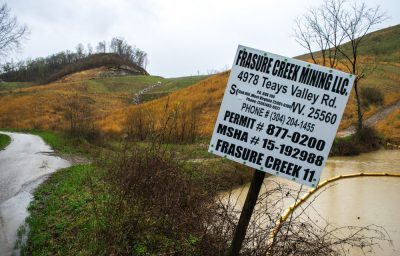
A coalition of citizens’ groups including Appalachian Voices filed objections to a proposed settlement between Kentucky’s Energy and Environment Cabinet and one of the state’s largest coal mining companies, Frasure Creek Mining. The agreement would legally resolve over a thousand water pollution violations from 2011 and 2012 at all of Frasure Creek’s mines across Eastern Kentucky, but the agreement will not fix the pollution problems.

Despite the fact that we are full parties to this enforcement action, this agreement was crafted entirely behind closed doors without us. Over and over again the cabinet has made every effort to exclude us and aid polluters. One of our objections to this settlement is that it has violated our right to due process since our names are on this agreement yet we had no say in it whatsoever.

Some of Frasure Creek's false conductivity values

Even more alarming, we expect that if this agreement is entered the cabinet will likely try to argue that this makes another ongoing case that we are involved in moot. That case is primarily based on blatantly false water monitoring reports submitted by Frasure Creek. Prior to that legal action, Frasure never admitted having pollution problems like the ones at issue in this case. It was not until they came under increased scrutiny, following our initial court filing, that they began reporting more truthful water monitoring data, uncovering the pollution violations at issue in this settlement.

Read more
...


Coal Ash: Now a Part of a Balanced Breakfast


Thursday, January 31st, 2013 | Posted by Hallie Carde


This just in: in addition to fruits and veggies, our nation’s children should be getting their daily dose of coal ash. Or at least that’s what statements at a public hearing in Franklin County, Missouri, seem to suggest.

Just last week, there was a hearing for a lawsuit filed by the Labadie Environmental Organization over a zoning amendment that would allow Ameren Corp. to construct a new coal ash landfill in the heart of a floodplain. Toxicologist Dr. Lisa J.N. Bradley, testifying on behalf of Ameren Energy Corporation, said, “A child could consume coal ash every day and have no increased exposure to arsenic.”

Bradley was recently elected to the Executive Committee of the American Coal Ash Association, a lobbying organization whose membership includes Ameren, Duke Energy, Southern Company and other large coal-burning utilities. Unfortunately, it seems that conflict of interest was lost on Associate Circuit Court Judge Robert D. Schollmeyer, who dismissed the lawsuit citing Bradley’s testimony.

Maximiliano Calcano, age 2, is one of the first children born with a dramatic birth defect attributed to the coal ash dumping in the Dominican Republic.

There are many who have had to face the traumatic effects of toxic coal ash firsthand. Following the AES Corporation’s dumping of 80,000 tons of coal ash waste along the shores of the Dominican Republic between 2003 and 2004, the country’s women have suffered years of consistent miscarriages, abnormal levels of arsenic in their blood, and births to babies with cranial deformities, external organs, and missing limbs.

While we have yet to uncover such a horrific case here in the states, concerns over coal ash are real. Archie Dixon lives just south of Belmont, N.C., where Duke Energy’s coal ash ponds are some of his closest and most unwelcome neighbors. Distrustful of the visible grime and discoloration of his water, Mr. Dixon has been buying bottled water for years, unwilling to ingest the water from his home’s private well. Despite reassurance from Duke Energy officials who say that lab tests show that the sediment in Mr. Dixon’s water is of naturally occurring materials, he refuses to take any risks with his water. Dixon is not the only member of his community concerned about coal ash.

Read more
...


Sustaining Healthy Appalachian Communities


Friday, November 16th, 2012 | Posted by Brian Sewell


Editor’s Note: Wendy Johnston is a sixth generation West Virginian from Mercer County and the granddaughter and great granddaughter of coal miners. Her post is the second in a series of guest blogs coinciding with our “No More Excuses” campaign on iLoveMountains.org, where we ask impacted Appalachians why President Obama should make ending mountaintop removal a priority in his second term. We’re happy to feature her story here.

***

"Our plea is this: please quit pitting neighbor against neighbor in a fabricated war against a finite resource, support our sustainable business ventures, invest in the future of our children so that they can stay in healthy Appalachian communities."

“Oh the West Virginia hills how majestic and how grand, with their summits bathed in glory like our Prince Emmanuel’s land. Is it any wonder then that my heart with rapture fills, as I stand once more with loved ones on those West Virginia hills?”

That is a verse from the state song of West Virginia. As a child I can remember feeling so proud every time I sang this song. As a college student living away from my family this song made me feel closer to the hills that seemed so very far away, and as a young mother just moving home after a long absence I could not wait to teach my children the song that would be their state song. Little did I know that one day the words to this song may not be true, that our majestic mountain summits would someday be destroyed and that even our loved ones gone on before us would have their resting places disturbed.

Mountaintop removal has put in jeopardy more than just those mountain summits though. This form of mining has destroyed entire communities, poisoned water systems, polluted our air and caused one of the largest health emergencies in our nation’s history.

Read more
...


Worried about Water? The EPA’s New Tool Can Help


Tuesday, October 23rd, 2012 | Posted by Brian Sewell


Maps provide a valuable perspective of the lay of the land, the ability to identify local waterways, their length and proximity to urban or agricultural areas, and their connectivity as they wrap around hills or snake through open plains. But there was always something you couldn’t learn about rivers and streams near your community by just looking at a map, at least until now.

On the 40th Anniversary of the Clean Water Act last week, Appalachian Voices was so caught up celebrating with the release of our “Clean Water Act at 40” report and video, we almost missed the release of the U.S. Environmental Protection Agency ingenious, easy-to-use website and mobile app, “How’s My Waterway?” Just enter your town, or let the tool find your location, and you’ll see a map like most others. But in a few clicks, you can find out which of your local waterways are polluted — and for those that are, what’s being done about it.

Once a river or stream is selected, “How’s My Waterway?” provides a rundown on the type of pollution reported for that waterway. Keep clicking and you’ll find a wealth of technical information and reports with descriptions of each type of water pollutant, likely sources and potential health risks. Pretty cool, huh?

Checking up on my local waterways using the EPA's new "How's My Waterway" tool.

So cool, that I’ve been digging into water data that I didn’t even realize was available. After letting the tool find my home in downtown Boone, I zoomed in on the Middle and East forks of the New River where they run through the eastern edge of town. According to the 2010 data used in creating “How’s My Waterway?”, both stretches of water are impaired for aquatic life. Looking at the map, the streams border the Boone Golf Course.

Read more
...


Happy 40th Birthday, Clean Water Act!


Thursday, October 18th, 2012 | Posted by Sandra Diaz


At Appalachian Voices, we strive to connect communities, families and individuals to their decision-makers to help them protect their land, air and water. We see ourselves in service to those people to help them achieve their goals of providing a good quality for themselves and others.

The Clean Water Act, which is 40 years old today, is very similar. The landmark legislation fundamentally changed the nation’s relationship to its waterways. Going into the 1970s, our waterways were in terrible shape. Only one-third of our waterways were fit for swimming and fishing. Chemicals were allowed to spew into our rivers and streams. Time magazine had written Lake Erie’s obituary. The Cuyahoga River in Northeast Ohio was so choked with pollution that it had burst into flames several times over a decade.

Citizens from across the country, realizing that we needed to do something, and do something quickly, took to the streets and demanded change. A slew of new environmental protections came into being, including the Clean Water Act in 1972.

Read more
...


Landmark Settlement Proposed in Kentucky Water Pollution Case


Friday, October 5th, 2012 | Posted by Eric Chance


Appalachian Voices, along with a coalition of citizens’ groups, has reached a historic agreement with International Coal Group, Inc. (ICG), and the Kentucky Energy and Environment Cabinet over years of false reporting and water pollution violations in Eastern Kentucky and a failure by the state to enforce the Clean Water Act.

We are very glad to achieve this settlement which will help clean up pollution in streams throughout the coal-impacted region, and we are proud to have worked with our partners in this important case that has already yielded changes in the coal industry and state regulatory agencies. The agreement was filed today in Franklin County Circuit Court and needs to be approved by the judge before taking effect.

Read our press release to find out more about the settlement.

In 2010, we uncovered dozens of pollution monitoring reports submitted by ICG and Frasure Creek Mining to the cabinet that were clearly false. Our analysis showed that some reports included all the same data as previous reports, but the dates had been changed. In other cases, there were multiple and contradictory reports for the same discharge point. Not only were the reports inaccurate, they were masking major pollution problems, as can be seen in the graphs below.

ICG Knott Conductivity

Read more
...


Go Tell It on Mountain Island Lake


Saturday, September 29th, 2012 | Posted by Matt Grimley


Last Sunday, the Charlotte Observer asked the question, “Are we doing enough on coal ash?” Two people stepped in to answer. The column in the negative was written by Sam Perkins, Director of Technical Programs for the Catawba Riverkeeper Foundation; the column in the affirmative was written by Mitch Griggs, vice president of environmental services for Duke Energy.

Perkins says that coal ash doesn’t get the hype it deserves. It leaches into our major rivers and lakes, poisons our fish and wildlife, and was the catalyst for one of the worst environmental disasters in our nations history. The fact is that coal ash is toxic: the heavy metals it contains are associated with cancer, birth defects, and other health problems.

“A person is entitled to do as they please on their property while respecting and not impacting property that is not their own,” says Perkins, raising a valid point: why are we allowing companies to pollute our waters? Clean water is our right, and why should current environmental regulations, which are inadequate and laden with exceptions for large utilities, allow utilities to plant coal ash ponds by public areas like Mountain Island Lake?

Aerial photo of the Riverbend coal ash ponds and their proximity to Mountain Island Lake

Fortunately, the people who live and love Mountain Island Lake, are stepping in, people like Sara Behnke. She heads up the organization We Love Mountain Island Lake, and is working to inform the public about the dangers of coal to our air, water and health. Specifically, she speaks up about the Riverbend Steam Station, its coal ash ponds, and their proximity to Mountain Island Lake, which happens to serve drinking water for Charlotte-Mecklenburg, Gastonia, and Mt. Holly. All in all, about 860,000 people get their drinking water from Mountain island Lake.

Read more
...


Update: House Passes Dirty Coal Package


Monday, September 24th, 2012 | Posted by Thom Kay


UPDATE: Last Friday, the House passed the Dirty Coal package, H.R. 3409, by a vote of 233-175. Thirteen Republicans, led by Rep. Mike Fitzpatrick (PA-8), crossed party lines to oppose the bill and stand up for Appalachian communities and public health. The three parts of the bill not related to mountaintop removal mining had received little Republican opposition, but the pro-mountaintop removal language caused over a dozen Republicans to oppose.

Disappointingly, Ben Chandler (KY-6) and Larry Kissell (NC-8), both cosponsors of the Clean Water Protection Act, voted FOR the bills, as well as bad amendments.

The “Stop the War on Coal Act of 2012” is not expected to be taken up in the Senate, and the President has threatened to veto the legislation.
————————————————————————————————————————-
This Friday, the U.S. House of Representatives will vote on a package of bills they are calling the “Stop the War on Coal Act of 2012,” and so far they’ve managed to keep a straight face. The package is comprised of five bills, four of which have already been passed at least once by the House, including the Dirty Water Act, the coal ash bill (again), and a bill to stop EPA from regulating carbon emissions. Instead of bringing the fifth bill up for a vote by itself, House Majority leadership has, for no legitimate legislative reason, decided to lump it in with four others that give coal companies the right to ignore both the Clean Water Act and the Clean Air Act.Bill Johnson Likes Coal

The fifth bill is Rep. Bill Johnson’s (OH-6) H.R. 3409, the “Coal Miner Employment and Domestic Energy Infrastructure Protection Act,” which may seem a bit wordy but has the catchy acronym “CMEDEIPA.” The bill is all about protecting the coal industry’s ability to continue mountaintop removal mining in Appalachia, although it would also derail efforts to protect streams from underground longwall mines.

Read more
...