Get Our RSS Feed!
Front Porch Blog


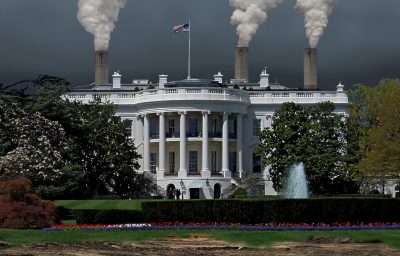
EPA’s Benefits Greatly Outweigh Costs, According to OMB Report


Wednesday, May 15th, 2013 | Posted by Davis Wax


A new report shows the EPA's rules, especially on air pollution, are saving money and lives.

During their push to abolish, obstruct and stymie the Environmental Protection Agency over the past few years, House Republicans have beleaguered the agency for regulatory measures they consider “job-killing” or “anti-industry,” hoping to revert federal environmental regulation to state control or make protections obsolete altogether.

Those in favor of federal rules have argued that national standards allow for the most effective and consistent protections and, as a result, will lead to reduced costs in health care directly associated with air and water pollution.

A new report from the White House’s Office of Management and Budget makes a clear case for why the country needs the EPA. The report includes an analysis of the costs and benefits of a number of federal regulations over the past decade and shows EPA rules, especially those pertaining to air protection, to be the most costly among all the rules evaluated but also the most beneficial.

The budget office estimates that the EPA’s rules account for 58 to 80 percent of the monetized benefits of all federal rules, but 44 to 54 percent of the total costs. Out of these benefits, close to 99 percent come from rules that seek to improve air quality. The report claims that the large estimated benefits of the EPA rules following the arrival of the Clean Air Act stem mostly from the reduction of a single air pollutant: fine particulate matter.

Read more
...


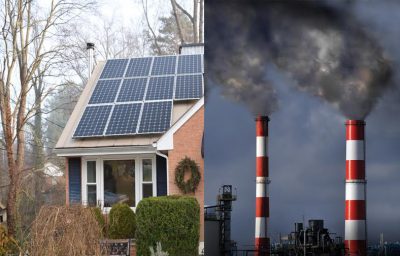
A Must-Read Report, Another Reminder It’s Time to Build Something New in Central Appalachia


Tuesday, May 14th, 2013 | Posted by Brian Sewell


An updated and expanded report is a potent reminder that coal's decline isn't going away and policymakers should accept the challenges, just as many people already have. Click through to read the report's key findings.

The litany of voices pointing to the writing on the wall for the Central Appalachian coal industry continues to grow. They’re saying the same thing in almost every way imaginable, and have been for some time.

Watching coal production decline and demand shift as other energy sources out-compete coal domestically, it is vital that policymakers in Central Appalachia begin implementing policies and investments aimed at building a foundation for economic alternatives in coal-producing counties. A report released this morning by the consulting firm Downstream Strategies is a pretty good reminder why.

“The Continuing Decline in Demand for Central Appalachian Coal: Market and Regulatory Influences” expands on a January 2010 study and provides a detailed look at the challenges Central Appalachia faces, further making the case for the urgent need to act.

As the report’s lead author, Rory McIlmoil, who recently joined Appalachian Voices’ staff as energy policy director, points out:

Numerous factors influence demand for Central Appalachian coal, each of which has had — and will continue to have — a significant impact on the local economies where the coal is mined. In 2010, we recommended that state and local leaders take immediate steps to help diversify coalfield economies. To a large extent, that has not happened. However, it is vital that public officials begin making the political and financial investments necessary to build the foundation for new economic development opportunities in coal-producing counties.

Read more
...


Of Monsters and Zombies: NC Legislature Turning into Bad Horror Flick


Monday, May 6th, 2013 | Posted by Davis Wax


NC Legislative Building.

Scary things are going on in the NC Legislative Building in Raleigh. Photo by Yassie

Among the scary legislation developing in the North Carolina assembly, there are two bills — one a monster of bad environmental reform and the other back from the dead in order to snuff out the state’s renewable energy — which stand out from the creepy pack. These bills are not exactly the slow and shambling kind of creatures from old 50s horror movies, though, and are moving quickly through the state legislature.

The first, the newly-drafted Senate Bill 612, or Regulatory Reform Act, could have many wide-sweeping and detrimental consequences for environmental regulations in North Carolina. The legislation, which passed through the state Senate last Thursday, would limit how local governments can produce and control regulations to protect the environment. Among other measures to weaken environmental protections, the bill would:

  • Loosen requirements for cleaning up groundwater pollution
  • Loosen requirements for burying demolition debris
  • Force state environmental rules to be equal to or less strong than federal standards
  • Loosen regulations in place to help wetlands
  • Create a fast-track system for erosion-control permits

The first point, fewer requirements for cleaning up pollution in groundwater, is hugely concerning. This provision would increase compliance boundaries to a facility’s property line, allowing coal-fired power plants and other industrial facilities to pollute groundwater farther away from their sites.

Second on the list, demolition debris can contain anything from lead paint to asbestos to PCBs, all of which are more likely to pollute water sources if not adequately buried. The provision does not clarify how coal ash waste applies to “demolition debris” and thus the bill could help power plants avoid certain aspects of the permitting process for coal ash ponds.

Another worrisome aspect of the bill is that it would require state environmental agencies and commissions to identify and repeal any existing rules that are stricter than similar federal rules and likewise would not allow local governments to produce rules stronger than state or federal rules.

Read more
...


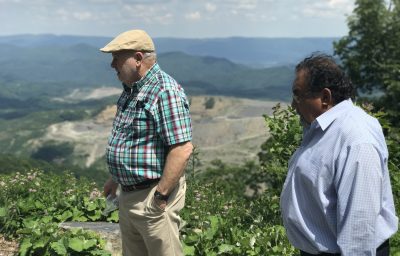
Mountaintop Removal 101: Congressional Research Service Updates Report


Thursday, May 2nd, 2013 | Posted by Brian Sewell


An updated report by the Congressional Research Service provides a look at the current legal and legislative challenges to mountaintop removal.

Every day, more Americans become concerned with the threat of mountaintop removal in Appalachia. Just yesterday, I was made aware of a website called “What About Mountains?” created by a fourth grade class at the Episcopal School of Knoxville. These students may just be learning about the issue, but they know that “mountaintop removal coal mining is not OK,” and seeing a photo of lush mountains reduced to “ugly blobs of land” is as fine a place to start as any.

Whether you’re in fourth grade or in your forties, it’s helpful to have a convenient compendium on the issue of mountaintop removal, especially considering the ever-evolving legal battles, status of bills on Capitol Hill, and state and federal level regulations. An updated report from the nonpartisan Congressional Research Service called Mountaintop Mining: Background on Current Controversies acts as a CliffsNotes for anyone concerned with the situation and interested in catching up.

The report summarizes the legal challenges, agency and congressional actions related to mountaintop removal and points out that, despite two recent court rulings underscoring the need for greater protections, few people on either side are please with the U.S. Environmental Protection Agency’s record on the issue. Mountaintop removal supporters complain of onerous rules that hamper employment and opponents point to poisoned water, unhealthy communities and shortened lives.

Read more
...


Tennessee Tuesday: What Do We Do Now?


Tuesday, April 30th, 2013 | Posted by JW Randolph


This is a post about how we can improve life for Tennesseans, protect an American culture that has endured for centuries, and promote our beloved Appalachian Mountains that once stood higher than the Himalayas, and are now threatened by mountaintop removal coal mining.

Tennessee Tuesdays is a new weekly feature on the Appalachian Voices Front Porch blog. While our main goal is to end mountaintop removal, we also hope to spread the gospel of hope, bring light to issues facing Tennesseans, and offer solutions on how we can move our state toward a cleaner and more energy efficient future.

Are you from Tennessee or nearby? Introduce yourself in the comments and let us know what you’d like to hear about. For now, welcome! Have a cup of coffee and take a minute to enjoy your Tennessee Tuesday.

What’s been happening in Tennessee lately?

Tennessee Legislature 2013
My home state has been in the national news a lot the last few months and not for the greatest reasons. Our legislature was constant fodder for late night comedians (catch Daily Show and Colbert’s greatest Tennessee hits here, here, and here) and was generally considered a bumbling embarrassment for most Tennesseans who don’t respond to “Senator.”

Read more
...


Rushed Anti-Renewable Energy Bill Stalls in Committee


Wednesday, April 24th, 2013 | Posted by Davis Wax


Shine On: Clean energy in North Carolina will continue to create jobs and yield benefits after a bill to repeal the state's renewable standard failed in committee today. Image licensed under Creative Commons.

A bill in the N.C. House that would repeal the state’s Renewable Energy Portfolio Standard (REPS) failed today in the House Committee on Public Utilities and Energy by a vote of 18-13.

According to the N.C. Sustainable Energy Association talk of insufficient votes in the Environment Committee prompted Rep. Mike Hager to withdraw the “Affordable and Reliable Electricity Act” from the committee’s scheduled hearing in order to attempt to push it through the Public Utilities Committee, which he chairs.

“If the only way a business can move forward is with a subsidy, then maybe we need to rethink the business,” said Hager, a former Duke Energy employee and the bill’s primary sponsor. Fellow lawmakers responded by saying that Duke Energy has an effective subsidy through its huge monopoly on electricity distribution in the state and that subsidies have been used to help up-and-coming industries for decades.

Even after Hager agreed to keep the 12.5 percent commitment to renewable energy from retail sales of state utilities in the bill in order to make it more appealing, a bipartisan majority including several key Republicans in the Utilities Committee still killed the legislation. In the most recent version Hager pushed through, the bill would still allow companies like Duke Energy to let their renewable energy contracts run out without expecting them to pursue any further commitments to wind, solar, biomass, or other industries.

Read more
...


Renewable Energy Standard Targeted by N.C. Legislature


Friday, April 19th, 2013 | Posted by Davis Wax


North Carolina number five in solar.

North Carolina is number five in solar, but that huge success is under attack in Raleigh. Photo by SEIA.

Despite job creation directly linked to North Carolina’s burgeoning clean energy industry, the state’s modest renewable energy standard continues to be targeted by lawmakers.

The “Affordable and Reliable Energy Act,” which narrowly passed the House Commerce Committee, would warp the state renewable energy portfolio standard into a shadow of the law created with bipartisan support and the backing of the state’s largest electric utilities in 2007.

According to a study by RTI International and La Capra Associates, the state’s renewable standard has led to a net gain of over 20,000 clean energy jobs even while more than 100,000 jobs were lost in the N.C. economy during the same five years. The state’s clean energy investment has created a net revenue of $113 million since 2007, while the total economic benefit of clean energy over the past five years was $1.7 billion.

Investors are listening up and jumping on board, too, as clean energy investment has grown 13-fold over the past five years in North Carolina, resulting in an estimated 8.2 million megawatts being saved through renewable energy and energy efficiency projects. Additionally, it is estimated that state government energy efficiency programs have saved $427 million in taxpayer money.

Solar energy has soared in North Carolina due to the REPS. The state is fifth in the nation in solar installed and is projected to reach number four by this year, according to the Solar Energy Industries Association. Out of the 30 utility-scale solar projects in the Southeast in 2012, 21 were in North Carolina.

Those benefits could be cut short if the tunnel vision that has taken over North Carolina politics prevails.

Read more
...


Will This March Madness Be An Upset for Clean Water?


Friday, March 22nd, 2013 | Posted by Sandra Diaz


Basketball

Help Prevent a Clean Water Upset (Picture by mvongrue, hosted by Flickr)

UPDATE: The Senate Budget Resolution passed without any of the amendments mentioned below. Victory!

As most of you know, between the federal House of Representatives and the Senate, the Senate is usually the level-headed older brother of the family and tends to be a more deliberative legislative body. But this month the Senate decided it wanted to shake things up a bit by creating a little March Madness of its own.

The Senate is going through a seemingly insane process known on Capitol Hill as a vote-a-rama to reach a deal on a final Senate budget resolution. Senate leadership is allowing any number of amendments to be presented and voted on — whatever they can get done in 50 hours.

While all the amendments have yet to be presented, several of them take aim at the U.S. Environmental Protection Agency’s ability to do its job, which is to protect our air, water and public health. Some of the amendments could stop the EPA from:

    - Making sure states are complying with and improving water quality standards in accordance to the Clean Water Act.
    - Creating national standards for how coal ash, the toxic waste produced by coal-burning for electricity, is disposed and stored.
    - Restoring critical Clean Water Act protections to streams, wetlands and drinking water standards.

TAKE ACTION: We are asking supporters to contact their Senators. If you haven’t yet, there is still time.

Read more
...


Protecting Tennessee’s mountains? Not worth the Senate’s time.


Wednesday, March 20th, 2013 | Posted by JW Randolph


Despite broad citizen and political support for a bill protecting Tennessee’s mountains, the state Senate Energy, Agriculture and Natural Resources Committee today decided to not even allow public testimony on the measure and instead killed the bill.

SB99, the Scenic Vistas Protection Act, was slated to be heard by the committee during its usual meeting time at 9:30 (CST) this morning. The bill would prohibit mountaintop removal coal mining from ridges above 2,000 feet on the Cumberland Plateau.

Along with our good friend Ann League, a resident and property owner in Tennessee’s coal-bearing region, I had been scheduled to testify before the committee. But just as we were called up to speak, the chairman stopped us short. Several Members had left the room, and when none of the committee members offered a motion on the bill, the Chairman declared the bill dead, and we were not allowed to speak.

Despite the fact that Tennesseans from the left, right and center, and from a broad array of interests have come together to protect our mountains, our voices were silenced.

Instead, the senators chose to side with the coal industry whose political influence has long outlasted its ability to grow jobs in our state or protect the health and well-being of citizens in the coal region.

Two senators who have generally supported mountain protection, Ophelia Ford and Jim Summerville, didn’t come to the meeting, and a third, Charlotte Burks, who has voted for the bill in the past, left.

Update: We’ve posted my prepared statement here, and a powerful speech by Representative Gloria Johnson (D-Knoxville) here. The news has been picked up by outlets worldwide including Chinese television, Switzerland, Singapore, Businessweek, NBC News in states from coast-to-coast, and in dozens of outlets across Tennessee. Local blog Nooga.Com has a great summary

Renewed Resolve: Pushing for Energy Reform in Virginia


Wednesday, March 6th, 2013 | Posted by Nathan Jenkins


Appalachian Voices remains committed to achieving a more robust renewable energy policy that brings clean energy and good jobs to the commonwealth.

Reform of Virginia’s renewable energy law was in the spotlight on both sides of the political spectrum in the General Assembly this year. In the end, only a few adjustments were made to the law, none of which encourage the vibrant solar and wind industries that Virginians want, nor support a market for small businesses promoting renewable technologies.

But the shortcomings of Virginia’s latest legislative session have only strengthened Appalachian Voices’ resolve to achieve a more robust renewable energy policy that actually brings clean energy and good jobs to the commonwealth.

Laws have been enacted in 38 states to encourage the development of the renewable energy industry – and they have ushered in cleaner air and job growth. In some of those states, the industry is growing exponentially, in thousands of jobs and tens of thousands of clean megawatts.

Virginia has had a renewable energy law since 2007, but utilities have purchased credits rather than investing in Virginia jobs. At times, state law has been interpreted so that utilities cannot invest in renewable energy despite the enactment of renewable energy goals.

Appalachian Voices hoped to fix that during this year’s legislative session by advocating for a requirement that Virginia utilities could only use new wind and solar power built in Virginia to satisfy the law. Instead, a law spawned by Virginia Attorney General Ken Cuccinelli simply removed financial incentives for renewable energy and ignored our fix, despite support from the utilities.

Read more
...


Help Protect Kentucky’s Fish from Toxic Selenium


Wednesday, February 27th, 2013 | Posted by Eric Chance


Two headed trout, a result of selenium pollution. Courtesy of USFWS.

The Kentucky Energy and Environment Cabinet is currently attempting to significantly weaken the state’s water quality standards for selenium.

Selenium is a pollutant common at some coal mines that deforms and kills aquatic life. It bioaccumulates, increasing in concentration as it moves up the food chain, affecting larger fish and aquatic birds. At higher levels, selenium is toxic to people. Humans can be exposed to selenium through the water they drink and the fish they eat. Long-term exposure can damage the liver, kidneys, nervous system, and circulatory system.

Selenium pollution is expensive to prevent and to treat. By loosening standards, the cabinet is trying to protect the bottom line of polluters at the expense of the health of the state’s waterways and those that depend on them.

To learn more about selenium and why it is a problem in Kentucky, click here to read our selenium fact sheet (PDF).

Public comments are being accepted through Friday, March 1. Please help protect Kentucky’s fish from the toxic effects of selenium. Take a minute to make your voice heard by submitting a comment.

Even The Daily Show has taken note of the problem of selenium pollution in our nation’s waterways. The clip focuses on pollution from phosphate mines in Idaho, but the similarities between what happened there and what is going on in Kentucky are striking.

Virginia Transportation Board OKs Coalfields Expressway Project


Thursday, February 21st, 2013 | Posted by Nathan Jenkins


Approved on Wednesday by the Commonwealth Transportation Board, the redrawn route prioritizes Alpha Natural Resources' access to coal, not travelers' access to local communities. Click to view the full-size map.

Yesterday, Virginia’s Commonwealth Transportation Board approved a four-lane divided highway that will flatten steep mountain ridges in southwest Virginia along a route proposed by Alpha Natural Resources — the largest coal company operating in Appalachia today.

The proposed 26-mile Coalfields Expressway is only a few miles off of several less destructive routes studied by the Virginia Department of Transportation in 2001 when it conducted a detailed environmental review of the area. The difference is that VDOT looked for a suitable place to build a highway. Alpha and other coal companies such as Rapoca Energy, on the other hand, selected the most profitable route for surface mining, using the highway as justification for the environmental toll they would inflict along the way.

This difference in purpose of the proposed routes is apparent when you look at the estimated impacts. The route VDOT selected in 2001 would have a 750-foot right of way that would disturb about 1,100 acres of land, four miles of streams and 720 acres of forest. Those impacts alone are daunting, but they pale in comparison to the redrawn route. Alpha’s path of destruction, with its 2,200-foot right of way, would flatten more than 2,100 acres, bury 12 miles of streams and clear-cut more than 2,000 acres of forest — not to mention destroy two churches and three cemeteries.

Nevertheless, VDOT sees this “coal-synergy” project as beneficial because it will cost taxpayers $2.8 billion to build, as opposed to the projected $5.1 billion without collaboration from the coal industry. The savings are disputable, however, and do not factor in the environmental cost of the road’s relocation. VDOT’s rush to make this project a reality has led them to disregard recommendations from the U.S. Army Corps of Engineers, the U.S. Environmental Protection Agency and the U.S. Fish and Wildlife Service — all of which are asking for a full environmental review of the new route.

Read more
...


N.C. State Rep. Harrison: Let the EPA Do Its Job


Wednesday, February 20th, 2013 | Posted by Davis Wax


Watch N.C. Rep. Pricey Harrison testify before the U.S. House Subcommittee on Environment and Economy.

What should the role of the states be in protecting human health and the environment?

Last Friday, the U.S. House Energy and Commerce Subcommittee on Environment and Economy held a hearing to untangle that complex question. North Carolina Rep. Pricey Harrison testified to the committee on the need for increased oversight and regulatory enforcement by the U.S. Environmental Protection Agency.

“The question is not whether states or the federal government have a role in environmental protection,” she told subcommittee members, “but whether each is playing its appropriate role under current law.”

Harrison highlighted the growing concerns of North Carolinians’ surrounding coal ash pollution from disposal ponds owned by Duke Energy as an example of how states are failing to protect citizens. The state began requiring more extensive groundwater monitoring a few years ago. But even now, with known instances of groundwater standards violations, no action has been taken by the state to get Duke Energy to address the contamination.

Another emerging issue is the reckless push to bring hydraulic fracturing to the state. State Senate Bill 76 would allow fracking in the state in two years, no matter the status of the state’s regulatory development, resources or staffing.

Read more
...


“I’m Here Because I Love Mountains:” Watch a speech by Appalachian Voices’ JW Randolph


Tuesday, February 12th, 2013 | Posted by


On Feb. 8, Appalachian Voices Tennessee Director, JW Randolph, spoke to members of the state legislature, the media and the environmental community. Below is a video and the transcript of his speech in support of the Tennessee Scenic Vistas Protection Act, a bill to protect the state’s virgin ridgelines from mountaintop removal coal mining.

Hello, my name is JW Randolph, and I’m proud to serve as the Tennessee Director for Appalachian Voices. I’m here to speak with you for a few minutes about efforts to protect Tennessee’s mountains, but first I want to thank the members that have joined us here this morning. Chairman Southerland and Representative Gilmore have both supported the Scenic Vistas Protection Act, and we’re happy you’re here. We’re thankful to you both and look forward to continuing to work with you to pass this important legislation. I would also like to thank those in attendance for engaging in the democratic process, and finally I’d like to thank the Tennessee Environmental Council, Gretchen Hagle, John McFadden and your team. You guys are great leaders in this movement here in Tennessee and for us here on Capitol Hill, we all appreciate you and the work you do.

I’m here because I love mountains. I grew up in a log cabin my father built in the woods, on the banks of the Tennessee River. And like many of you, I got to know my family, my place, and our history through walking the beautiful woods and waters of middle Tennessee, fishing, hiking, and 4-wheeling. The time spent in these mountains taught me about freedom, responsibility and self-reliance. This was where I learned the best of home, the best of our state, and the best of what our country has to offer. As I got older, I learned that not too far away, near our ancestral land, coal companies were blasting apart the mountains, and poisoning the streams that we ran through.

My daughter will turn two years old this month. When I was her age, there were 500 mountains across Appalachia that are no longer there. Since then there have been 2000 miles of streams buried by mining waste, and 125-square miles of The Cumberland Plateau that has been altered irrevocably. That is why its important that Tennesseans join the effort to pass the Tennessee Scenic Vistas Protection Act.

Read more
...


Duke CEO Could Be New Energy Guru || N.C. Round-Up


Friday, February 8th, 2013 | Posted by Davis Wax


Over the past few weeks there has been a spurt of environmental and energy news in North Carolina and its capital, Raleigh. The developing issues include departing Charlotte-based Duke Energy CEO Jim Rogers being considered for the President’s cabinet, a new bill looking to end state environmental and health rules, and the governor’s endorsement of offshore wind power.

Jim Rogers in Energy Spotlight, Mixed Record and All

With Department of Energy Secretary Steven Chu officially resigned, who will become the DOE’s new chief? The business world has speculated that Jim Rogers, the outgoing CEO of Duke Energy, is a likely candidate.

Duke Energy, the company Rogers is leaving, opened three new N.C. plants in December.

GreenTech Media cited his experience with coal, gas and nuclear industries and Bloomberg Businessweek highlighted his solar and wind experience as well as his potential to bring an energy policy that “sharply reduces carbon emissions”. Rogers’ role in bringing the Democratic National Convention to Charlotte last year may also improve his chances of becoming President Obama’s head adviser on energy.

While Rogers has repeatedly stated his disinterest in joining the president’s cabinet, John Downey at the Charlotte Business Journal has pointed to Rogers’ recent Bloomberg Television interview as a sign that the out-the-door CEO has considered what he would do in such a position. When asked what he would bring to the DOE job, writes Downey, Rogers cited his years of experience in the energy sector and being able to get “the balance right between cheap, affordable energy and meeting our environmental goals.”

Under Rogers, however, Duke Energy has had a mixed reputation in supporting renewable energy in North Carolina. The company is still a paying member of the American Legislative Exchange Council, or ALEC, which creates model state laws that frequently roll back health and environmental protections in favor of promoting industry.

Read more
...


N.C. Environmental Commissions Under Attack by Senate Bill 10


Wednesday, February 6th, 2013 | Posted by Davis Wax


Update: In about 48 hours, with almost no chance for public input, the North Carolina state Senate passed a poorly designed bill to fire all current members from several N.C. advisory boards and commissions, including the Utilities Commission and Environmental Management Commission. Give your state Rep. a call today and ask that they oppose this legislative overstep and actually govern. [http://www.ncleg.net/representation/WhoRepresentsMe.aspx]

An unprecedented power grab is in the works in North Carolina, where Republican majority leaders are looking to cut and replace environmental and other key decision-makers on the party’s own terms.

State Sen. Bill Rabon introduced SB 10 aimed at removing environmental experts from state committees. Photo credit to ncleg.net.

The N.C. Senate Rules Committee met on Feb. 5 concerning Senate Bill 10, the “Government Reorganization and Efficiency Act,” legislation that seeks to remove 131 members of eight influential state boards and commissions before their terms are up. This action would see the effective gutting of environmental experts from the state’s decision-making process and the likely appointment of new, pro-industry members.

If there were ever a time to send a message to your North Carolina state senator, it would be now. Call them or email them today!

Among the committees being affected are the Coastal Resources Commission, the Environmental Management Commission, the Industrial Commission, and the Wildlife Resources Commission. Most importantly, the bill would allow the General Assembly and the governor to hand-pick replacements.

The number of environmentally-focused boards possibly being stripped of their membership could spell disaster for ongoing projects concerned with regulating pollution and protecting the environment. The new commission members would not have the level of expertise or the familiarity with the projects of current members, thus ensuring the degradation of the state’s progress toward proper environmental protection.

That’s not the whole story, though, as further steps are being taken to weaken the influence of environmentally-conscious voices in the legislature.

Read more
...


Turning a Win-Win into a Lose-Lose: Virginia Senate Kills Renewable Energy Bill


Wednesday, February 6th, 2013 | Posted by Nathan Jenkins


Rather than fixing a problem, Virginia lawmakers prolonged it when they killed legislation to reform the state's renewable energy portfolio standard.

Last fall, Virginia Attorney General Ken Cuccinelli latched on to the idea that Dominion Virginia Power and Appalachian Power did not deserve huge bonuses for buying cheap renewable energy credits without actually building wind and solar projects in Virginia, and released an unsolicited report on the issue.

Appalachian Voices and our partners in the Wise Energy for Virginia Coalition have long advocated that the bonuses were failing to develop the renewable energy industry in the state and that a legislative fix is in order. The Senate Commerce & Labor Committee reached the same conclusion and tasked Cuccinelli and the utilities to work out an agreement, which they did.

The problem is that Cuccinelli, while claiming to resolve concerns from the environmental community, failed to invite us to the table. The result was a bill that simply dropped the bonuses, but did not replace those incentives with a mandate to build renewable energy in Virginia or even a preference for better quality credits.

The Wise Energy coalition worked with Senator Donald McEachin and Delegate Alfonso Lopez on legislation that requires credits purchased by utilities to be from the newest and cleanest sources of renewable energy. The proposal was carefully crafted with the singular goal of picking up where the attorney general’s bill left off, but it actually solves the problem of misplaced incentives and the lack of investment in Virginia wind and solar power.

It was a reasonable measure. However, despite strong supporting testimony from our unlikely ally — even Dominion said it was the “best solution” for solving the credits problem — it failed in a House Commerce and Labor subcommittee last week. The Republican chairman, Delegate Terry Kilgore, and his colleagues refused to address the problem.

Read more
...


The New Faces and Issues of North Carolina


Tuesday, January 15th, 2013 | Posted by


THE NEW FACES

For the first time since 1870, the Republican party controls both the executive and legislative branches in North Carolina government. With the General Assembly sporting veto-proof majorities in both its chambers, and Pat McCrory’s election making him the state’s first Republican governor in 20 years, the political landscape in North Carolina has morphed.

As the first Republican governor of North Carolina in more than 20 years, Pat McCrory will preside over Republican supermajorities in the state House and Senate.

Whether it’s for the better is undecided, as McCrory has a mixed environmental record. As mayor of Charlotte, he pushed for air quality protection, light rail development, tree preservation and smart urban growth.

McCrory, however, is vocal in his support of bringing offshore drilling and fracking to the state. He sidestepped the sea-level rise debate last year in the state legislature, saying he wanted to wait before “developing harsh regulations against facts that are still being debated.”

His administration will likely cut back on the N.C. Department of Environment and Natural Resources’ regulatory powers. His pick for head of DENR, John Skvarla, has been the CEO since 2005 of Restoration Systems, an environmental firm that restores damaged wetlands and collects credits to offset development elsewhere.

Since his appointment, Skvarla has commented that he wants to find common ground, as soon as possible, with environmentalists and that determining the most cost-effective regulations will be one of his biggest priorities.

During a recent interview with Laura Leslie and WRAL-TV, Skvarla said that North Carolina is “not going to go backward in air and water quality protection.”

Read more
...


Time to End Corporate Welfare for King Coal in Virginia


Wednesday, December 12th, 2012 | Posted by Nathan Jenkins


Expenditures on the coal industry dramatically outweigh benefits to the economy of Virginia, according to a new report by Downstream Strategies. Click to enlarge.

Virginia taxpayers have been boosting profits for the coal industry with tens of millions of dollars in tax breaks every year. That’s not big news – but what’s astounding is that, due to the structure of the subsidies, the Commonwealth is not only foregoing revenue, it is actually paying cash to the industry.

According to a report released today from the research firm, Downstream Strategies, the coal industry in Virginia got $37 million in subsidies in 2009. Factoring in the subsidies as well as all costs and revenues directly and indirectly tied to the industry, the report shows that the net cost to Virginia that year was $22 million dollars. Read the press release and fact sheet here.

And what are Virginians getting for that? Not much.

Read more
...


Welcome to Virginia’s Energy Conference, with your host King Coal


Thursday, October 11th, 2012 | Posted by Nathan Jenkins


Last week, Appalachian Voices and members of the Wise Energy for Virginia Coalition attended the Virginia Governor Bob McDonnell’s Energy Conference. Looking at the agenda, we were prepared for what would surely be a biased conference. But we didn’t know it would be this bad.

At every stage of the conference, the coal companies and electric utilities that survive on dirty energy completely suppressed the arguments for investment in energy efficiency and renewable generation. The state’s largest utilities, Dominion Virginia Power and Appalachian Energy, along with mountaintop removal giant Alpha Natural Resources, were the conferences top sponsors. Those sponsorships influenced the agenda, just as they influence in the Virginia General Assembly.

Virginia's energy policy is so concerned with how to keep coal relevant, Gov. McDonnell might as well wear his sponsors on his sleeve.

Dominion spent more than $5.5 million during the last decade in exchange for a hand in writing the laws under which it is regulated. That investment has proven worthwhile considering that Dominion stands to take in a $76 million bonus for spending less than $8 million on “clean” energy from other states, while building no new wind or solar in Virginia. This is just one of examples of corporate influence on energy policy reported in a white paper written by Appalachian Voices, the Sierra Club, and the Chesapeake Climate Action Network.

Use of coal for electricity generation is declining in the Southeast, largely due to market forces. While there is a lot of natural gas coming out of some of our neighbor states, we do not have much in Virginia. What we do have is a vast potential for energy efficiency and renewable generation, yet this conference refused to acknowledge this or take the rapidly growing wind and solar industries seriously.

Read more
...


Facebook Twitter FlickR YouTube
Front Porch Bloggers Tags
Show/Hide list (-)

15th Anniversary 112th Congress 113th Congress A & G A & G Coal Corporation Acid Mine Drainage Across Appalachia Agriculture Air Pollution air quality Alabama ALEC Alexadra Cousteau Alliance for Appalachia Alpha Natural Resources American Chestnut american dream appalachia Appalachian Appalachian Culture Appalachian history Appalachian Identity Appalachian Legislators Appalachian politics Appalachian Regional Commission Appalachian State University Appalachian Streams Appalachian Transition Appalachian Treasures Appalachian Voices Appalachian Voices board of directors Appalachian Water Watch Appalachia Restoration Act Appalachia Water Watch Appalshop arch coal Arsenic Art Asheville Athens County Avian wildlife Bank of America bark Batson Creek Battle of Blair Mountain Bearwallow Mountain Beyond Coal campaign biodiversity black bears blair mountain blood mountain Blue Ridge Commons: Environmental Activism and Forest History in North Carolina Blue Ridge Escarpment Book Club Boone buffalo creek cancer carbon capture Carolina Mountain Land Conservancy Center for Appalachian Studies Central Appalachia Charlottesville Chattanooga Chimney Rock State Park China citizens united Clean Air Clean Air Act clean energy Clean Water Clean Water Act Clean Water Act 40th Anniversary Clean Water Protection Act Climate Climate Change climate change denial Coal Coal Ash coal ash health effects coal ash ponds coal decline coal electricity coal employment Coal generation Coal mining coal plants coal production Coal Report Coal Waste conductivity Congress Connestee Falls constellation Creation Care Cross-State Air Pollution Rule Cumberland Plateau Cypress creek d.c. Daniel Martin Moore David Brewer David McKinley Democracy dnc Documentaries Don Blankenship Downstream Strategies duke Duke Energy DuPont State Recreation Forest Earth Day EarthJustice Earth Ministry Eastern Band of Cherokee Economic Transition Economy editorial Education efficiency electricity Electric Utilities Elk Knob State Park Emory River Endangered species end mountaintop removal energy Energy Efficiency Energy Information Administration Energy Saving Energy Savings Environment environmental education Environmental Justice environmental literacy Environmental Protection Agency EPA Expedition Blue Planet extinction FArCES of Coal FERC Fish Kill Florence Nature Preserve fly ash Folktales Fontana Lake Foothills Trail forest Forestry Fox Squirrels fracking Frasure Creek Frasure Creek Mining and International Coal Group friends of smokies Gallatin game species gas gas emissions Georgia Georgia Power ghost stories globalization Golden-winged warbler Google Earth Gov. Steve Beshear grandfather mountain Great Smoky Mountains National Park green green-collar green building green economy green energy future GreenFaith and the Evangelical Environmental Network Greenhouse Gases Greenpeace Green River Preserve Hal Rogers Hampton Roads Hampton Roads Coal Plant HB 710 headquarters Health Heifer USA Hickory Nut Gorge Hidden Treasures High Falls hiking Hiking the Highlands hiking trails home improvement and remodeling Hooker Falls houses Hunting hydraulic fracking hydroelectricity ICG iLoveMountains Inside Appalachian Voices Interfaith Power & Light Interior Department Ison Rock Ridge Jay Rockefeller Jeff Goodell Jeff Goodell Jr. Jim Justice Jim Rogers jobs Joe Manchin Joseph Pizarchik Jr. Kathryn Newfont Kathy Mattea Kens Rock Kentuckians for the Commonwealth Kentucky Kentucky Energy and Environment Cabinet Kentucky Litigation Kentucky Riverkeeper Kudzu kudzu bug land Land Conservation Land management land protection LEAF lobbying local farming Marcellus Shale Massey Energy Matt Wasson membership spotlight Mercury Mercury and Air Toxics Standard mercury and air toxic standards Michael Johnathon mine Mine Safety and Health Administration Mining Jobs Molly McGinn mountains Mountaintop Removal Mountaintop removal permits MSHA Mussels N.C. Politics Nally & Hamilton Nantahala National Forest National Mining Association National Resources Defense Council Natural Gas Naturalist's Notebook nature New River Nick Rahall North Carolina NRDC nuclear ODEC Office of Surface Mining offshore wind Ohio Operation Medicine Cabinet opportunities Outdoor Recreation Patriot Coal Pennsylvania Photography Pine Mountain Park Pisgah Forest Politics pollution Possum Jenkins Powder River Basin Prescribed burns President Obama progress Progress Energy Property Rights public lands re-zoning recycling recycling building materials Red Red White and Water Religion in the Environment Renewable Energy Renewable Portfolio Standards Rick Boucher Riverkeeper Rivers Robert F. Kennedy Same Sun Here scenic vistas Scenic Vistas Protection Act Science and Nature science education SELC Selenium selenium pollution Senate settlement sewanee coal seam shale gas Sharyn McCrumb Shelley Moore Capito Sierra Club Silver Slip sludge sludge safety project Solar Solar Energy Solar Homestead Project South Carolina South Cumberland Plateau Southern Appalachian Mountains Southern Appalachian Mountain Stewards Southern Environmental Law Center SouthWings spirituality Sportsman’s Heritage Act spruce pine state environmental policy Stone Mountain stop mountaintop removal Stream Buffer Zone Stream Protection Rule summer camps Sundance Power Systems surface mining Surface Mining Control and Reclamation Act Surry Surry Coal Plant sustainability sustainable agriculture sustainable alternatives sustainable building sustainable farming tax credits and incentives Tennes Tennessee Tennessee Scenic Vistas Protection Act Tennessee State legislature The American Chestnut Foundation The American Legislative Exchange Council The Appalachian Voice the human cost The Voice This Green House Tom Cormons Tom Hansell Tom Kilgore TRAIN Act Transylvania County treasures Triple Falls TVA TVA Kingston coal ash spill U.S. Department of Energy U.S. Representatives from North Carolina U.S. Representatives from Tennessee U.S. Representatives from Virginia U.S. Representatives from West Virginia UMWA Uncle Falls United Mine Workers of America United Mountain Defense united states Upper Watuaga Riverkeeper uranium mining US Forest Service Viewpoint Virginia Virginia General Assembly Virginia ODEC virginia state parks Virginia Tech Wales War on Coal washington Washington DC Watauga Water Waterkeeper Waterkeeper Alliance Water Pollution Water quality weatherization Weed Patch Mountain Week in Washington West Virginia White Squirrel Hiking Challenge Wilderness Society Wildlife Williamson wind energy Wind Power wind turbine Wise County Wise Energy for Virginia Wise Energy for Virginia Coalition wvdep Youngs Mountain

Tags